Open-End vs Endless Timing Belts: A Comparison Guide for Industrial Buyers
Short answer for buyers: the construction should be chosen from the motion function first, not from whether the belt has a splice. Linear positioning axes that must be threaded through a closed machine frame, and drives where elongation must stay low, normally favour an open-end timing belt with suitable low-elongation reinforcement. Continuous synchronous drives that transmit torque on fixed-centre pulleys require an endless construction — either a jointed endless belt or a truly endless belt. Open-end and truly endless PU timing-belt families are supplied as separate constructions, and the tooth system plus load capacity remain the engineering foundation beneath any coating, perforation or machining.
Why This Comparison Matters at the Decision Stage
Most timing-belt failures that reach a maintenance team are not caused by the belt material alone. Tooth damage is usually the result of a drive-system problem rather than ordinary surface wear. Incorrect tension, excessive load, worn or incorrect pulleys, foreign objects, misalignment and tooth-profile mismatch can all overload the tooth and tooth-root area. Continental specifically links abnormal tooth-flank wear and tooth shearing with incorrect tension, foreign material and seized pulleys, while Optibelt identifies excessive tension and defective pulleys as causes of tooth-root wear.
That matters because the open-end versus endless decision changes how a belt is installed, joined and tensioned. A buyer who selects construction on habit — or on the assumption that fewer joints always mean better performance — can end up with a belt that fits the machine but not the motion duty. This guide sets out the comparison criteria in the order an engineer or procurement team should actually apply them.
The Real Decision Problem: “No Splice” Is Not a Performance Specification
A seamless belt is not automatically the correct belt. In practice, timing belts reach the buyer in three different supply forms: open-end belt, jointed endless belt, and truly endless belt. The three forms exist because machines place different demands on installation access, loop geometry, elongation and load transfer.
Available joint methods for timing belts include welded joint, flex joint and endless joint, and torque-transmitting drives differ in how much they tolerate a joint at all. The practical question is therefore not “does it have a splice?” but “which construction does this motion function require, and can the supplier deliver that construction with a verified tooth profile and pitch?”
Decision rule: start from motion type, then confirm tooth profile, pitch, length or tooth count, and width — before deciding on reinforcement, endless or open construction, or special processing such as coating and perforation.
Industry Background: Why Open-End and Truly Endless Belts Are Supplied Separately
Industrial demand has pushed timing belts well beyond the automotive replacement market. The global timing belt market is projected to reach approximately USD 9.57 billion by 2030, growing from a 2025 base of USD 9.10 billion (Mordor Intelligence). Within that total, polyurethane constructions are expanding fastest in some research models: Credence Research reports a robust CAGR of 12.57% for the polyurethane timing belt market through 2032, while a conflicting estimate from 24ChemicalResearch puts PU growth at 3.10% — a variance the two publishers attribute to methodology, with the higher figure likely including high-value custom solutions and robotics. Buyers should treat PU growth forecasts as directional rather than precise.
Rubber remains the dominant material in the automotive timing belt segment, accounting for a market estimated at USD 7.23 billion in 2024 (Market Research Future). On the standards side, ISO 5296 specifies the principal characteristics of synchronous endless belts with pitch codes MXL, XXL, XL, L, H, XH and XXH, which is why endless belts are normally ordered by pitch code, tooth count and width rather than by a nominal length alone.
The supply side reflects this split. Open-end and truly endless PU timing-belt families are supplied as separate constructions, and application-specific coatings and fabricated timing-belt solutions are offered by suppliers such as Gates, Optibelt, Megadyne and Habasit. In other words, the open-end/endless choice is a product-family decision, not a minor ordering option.
Comparison Table: Open-End vs Endless Timing Belts
| Comparison criterion | Open-end timing belt | Jointed endless belt | Truly endless belt |
|---|---|---|---|
| Supply form | Supplied as an open length; closed loop created by a joint where required | Closed loop produced by joining a cut length to size | Manufactured as a closed loop with no splice |
| Available joint method | Welded joint or flex joint, depending on construction | Welded joint or flex joint | Endless joint / truly endless construction |
| Typical motion function | Linear positioning axes; drives requiring low elongation and threading through closed frames | Continuous synchronous drives where a closed loop is needed and a joint is acceptable | Continuous synchronous drives sized for torque and speed |
| Material availability | PU timing belts can be supplied open-end and endless, depending on profile and manufacturing construction | Same as base material selected | PU, rubber and other belt materials, depending on construction |
| Functional modifications | Coating, backing, perforation, grinding, cleats and V-guides can be applied to selected belts | As per base construction | As per base construction |
| Key risk to verify | Tension setting, tooth-profile match, pulley condition | Joint integrity plus tension and alignment | Tension and pulley condition; elongation behaviour under load |
| Failure pattern to watch | Tooth-flank wear, damaged tooth roots, missing teeth, tooth shear, fabric separation or intermittent ratcheting — commonly linked to incorrect tension, foreign material, seized pulleys or defective pulleys | ||
Tension Errors: The Wear and Tooth-Damage Mechanism Buyers Underestimate
Tension sits behind most premature tooth damage, and it affects every construction. When a timing belt is over-tensioned, the tooth root and the pulley groove carry loads the drive was never designed around; when it is under-tensioned, the belt can ratchet, ride high in the groove and wear the tooth flanks. Both failure directions have been documented by major belt manufacturers.
Symptoms that indicate a drive problem rather than “natural wear”:
- Tooth flank wear and damaged tooth roots
- Missing teeth or tooth shear
- Fabric separation
- Intermittent ratcheting or position loss
Documented causes: incorrect belt tension, excessive load, pulley wear, wrong tooth profile, pulley misalignment, foreign material, insufficient tooth engagement, and a seized idler or pulley.
Inspection sequence before replacing the belt:
- Inspect the damage pattern across several teeth rather than one tooth.
- Verify that the belt profile and pulley profile match.
- Check pulley teeth for wear or damage.
- Check belt tension.
- Verify shaft and pulley alignment.
- Check drive load and shock loads.
- Remove foreign objects or contamination.
- Replace the damaged belt and any defective pulley components together where necessary.
This sequence is also the correct answer to a common procurement mistake: ordering a replacement belt in the same construction as the failed belt. If the failure was caused by a pulley or alignment problem, the new belt will fail the same way.
Step-by-Step: Choosing Between Open-End and Endless
Step 1 — Define the motion function
Timing-belt selection should begin with the required motion function. Linear positioning points toward an open-end PU timing belt with suitable low-elongation reinforcement. Continuous synchronous drives point toward an endless or truly endless belt sized for torque and speed. High-grip product handling points toward a coated belt selected by friction and release needs. Vacuum feeding points toward a perforated or machined belt matched to the vacuum system.
Step 2 — Establish tooth profile, pitch, length or tooth count, and width
These four parameters should be settled before reinforcement, construction or special processing is discussed. Both belt length and tooth count can identify a timing belt when the pitch is known; tooth count is often especially useful because pitch length equals tooth count multiplied by pitch.
Step 3 — Confirm pulley compatibility
Two timing belts with the same length but different tooth profiles cannot be interchanged, because the tooth geometry and pitch must match the pulley system. Available tooth profiles include MXL, XL, L, H, T5, T10, AT5, AT10, HTD 3M, HTD 5M, HTD 8M and STS/RPP series, with tooth pitches such as 2.032 mm, 5 mm, 9.525 mm and 14 mm.
Step 4 — Choose the construction and joint method
Decide between open-end, jointed endless and truly endless supply forms, and specify the joint method where a joint is involved: welded joint, flex joint or endless joint.
Step 5 — Select the tension member
The tension member controls load-carrying ability, elongation and stiffness. Available core types include steel cord, Kevlar cord and glass fiber cord, with steel cord diameters such as Φ0.3 mm, Φ0.51 mm, Φ0.6 mm and Φ1.21 mm. Steel and aramid are the common examples.
Step 6 — Check pulley geometry limits
Minimum pulley teeth typically range from 10 to 25 teeth depending on tooth profile, and minimum turning diameter ranges from 10 mm to 108.7 mm depending on profile. Too small a pulley increases bending and can reduce load capacity and service life.
Step 7 — Add only the functional modifications the application needs
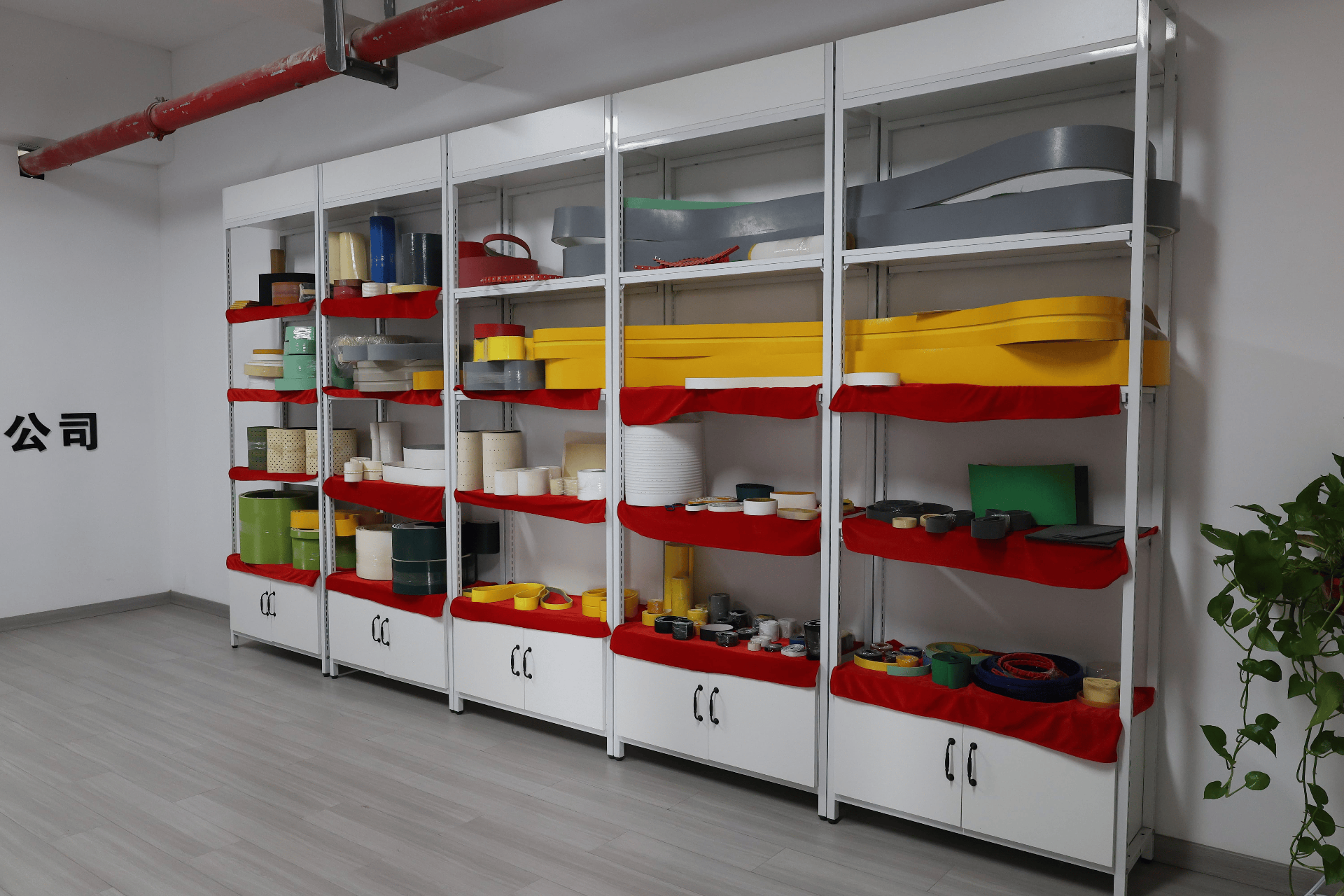
Selected timing belts can be coated for grip, compression, release or product handling, and selected PU timing belts can be drilled or machined for vacuum and handling systems. Surface treatments include tooth fabric, backing fabric, grinding and perforation.
Step 8 — Verify the supplier’s construction capability
An open-end or truly endless claim is only meaningful if the manufacturer can produce and inspect that construction. Ask for joint method, tolerance data and the equipment behind the offer.
Material and Coating Comparison for Handling Duties
Once the construction is fixed, material and coating choices decide whether the belt survives the product it touches. Standard belt materials sit at 90–92 Shore A hardness with a temperature range of –20°C to +160°C depending on material, so higher-temperature and high-grip duties need a different surface.
| Option | Core difference | Documented performance point | Best suited to |
|---|---|---|---|
| Aramid felt-coated timing belt | Provides a thermal barrier and a soft contact surface for hot products, whereas standard PU coating does not | Aramid felt backing can withstand surface contact up to 250°C, while standard PU coating is typically rated to about 80°C — a difference of up to 170°C at the backing level | Aluminium extrusion, hot glass, metal handling and high-temperature transfer |
| Silicone-coated timing belt | Higher grip and better release characteristics for sticky or film products | On PE foil, silicone static friction coefficient is 1.09 versus 0.64 for PU-coated belts, approximately 70% higher under the stated test conditions (Forbo data) | Packaging machines, film handling, food packaging, sticky-product conveying and positioning |
| Standard PU-coated timing belt | Baseline coating for general conveying and positioning contact | Typically rated to about 80°C at the backing level | General product handling where high temperature and high grip are not required |
| Rubber timing belt | Rubber remains the dominant material in the automotive timing belt segment | Automotive timing belt rubber segment estimated at USD 7.23 billion in 2024 (Market Research Future) | Automotive and general power transmission duties |
Two limits are worth stating plainly. Aramid felt-coated belts enable conveying in temperature zones where ordinary PU surfaces are unsuitable, but the benefit is process capability rather than energy efficiency. Silicone coating improves release and cleanability, which can reduce sticking-related intervention, but it is not a universal energy-efficiency gain. Specialty felt and coating constructions cost more than standard PU coating; the cost difference is application-dependent and is justified when the belt protects itself and the conveyed product.
Use Cases: Where Each Construction and Surface Fits
Linear motion and precision automation
Frequent acceleration and deceleration, servo positioning and high cycle rates push toward open-end PU belts with low elongation, controlled backlash and positioning accuracy. Linear axes normally favour open-end belts with low elongation.
Packaging machinery
High speed, frequent start-stop, precise positioning and repetitive cycles drive the requirement for accurate positioning, low elongation, high grip, vacuum perforation, wear resistance and dimensional stability. Continuous synchronous drives on these lines require endless constructions; vacuum and pick-and-place functions require perforation or machining matched to the vacuum system.
Printing and paper converting
Printing presses, folder-gluers and sheet feeders need high friction consistency, precise sheet positioning, abrasion resistance, low elongation and a non-marking surface. Silicone-coated belts are the usual answer where film or sticky products are involved; silicone offers a static friction coefficient of 1.09 versus 0.64 for PU-coated belts on PE foil under the stated test conditions.
High-temperature transfer
Aluminium extrusion, hot glass and metal handling exceed what a standard PU surface can survive. Aramid felt-coated belts reduce direct heat exposure to the belt body and provide gentler product contact.
Automotive and heavy-duty transmission
Heavy loads, oil, dust and continuous production call for high wear resistance, oil resistance, heat resistance, high load capacity and stable tracking — the environment where rubber constructions remain dominant.
Cost and Lifecycle: What “Cheaper” Actually Means
Synchronous belt drives are typically 98–99% energy efficient, compared with approximately 91–98% for chain drives. Compared with roller chain drives, synchronous belts provide positive transmission without lubrication or routine re-tensioning, and can reduce lubrication, tensioning and maintenance costs, which can lower lifecycle cost. The cost difference between belt options is application-dependent.
For a procurement decision, the honest framing is this: unit price alone will not tell you which belt is cheaper. A lower-cost standard belt that fails early on a hot product line, or a joint that is not suited to the drive, will cost more in downtime than the price gap between constructions. Conversely, specifying an aramid felt or silicone-coated belt for a duty that does not need it adds processing cost without adding capability.
Supplier Verification: How to Confirm the Belt You Ordered Is the Belt You Need
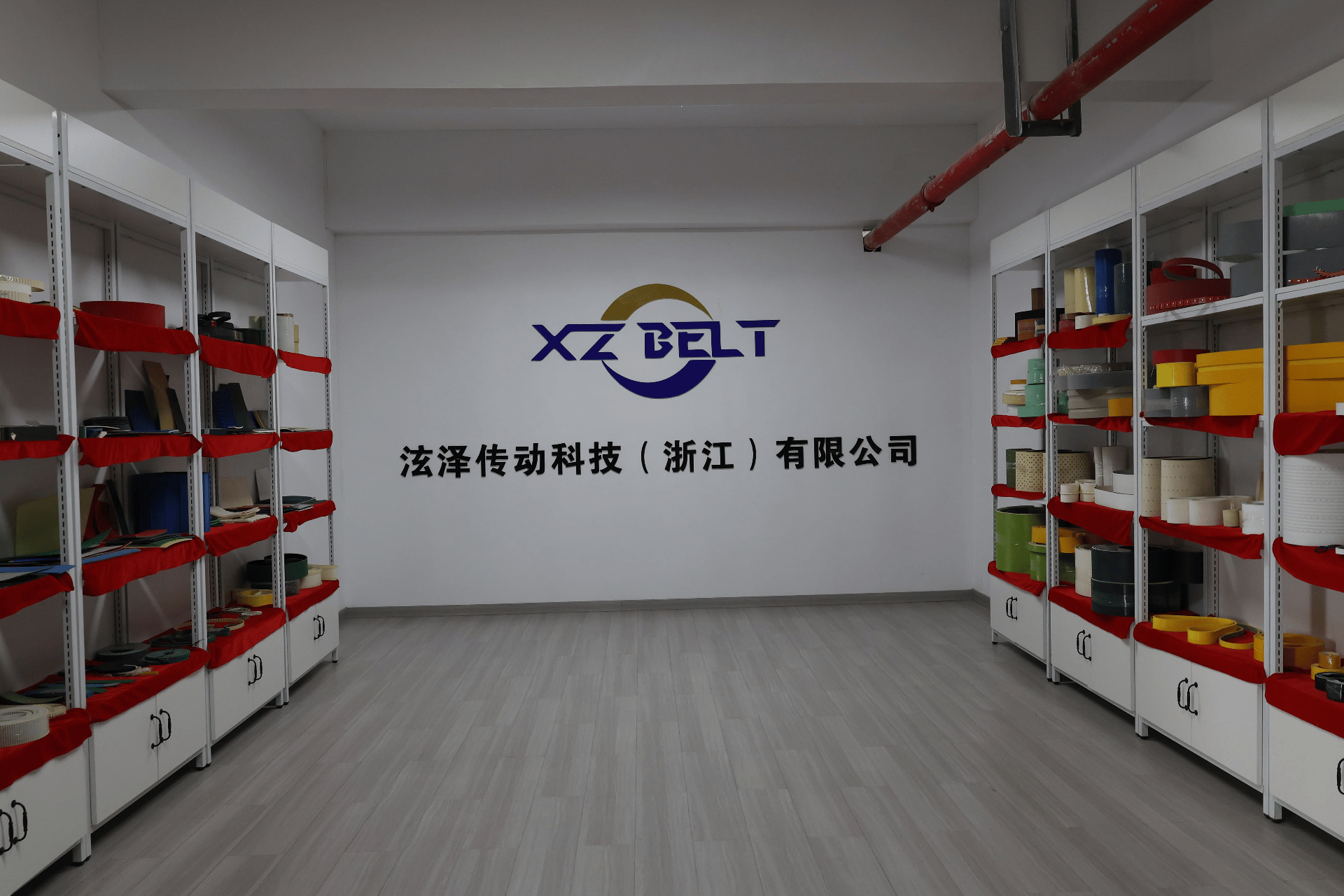
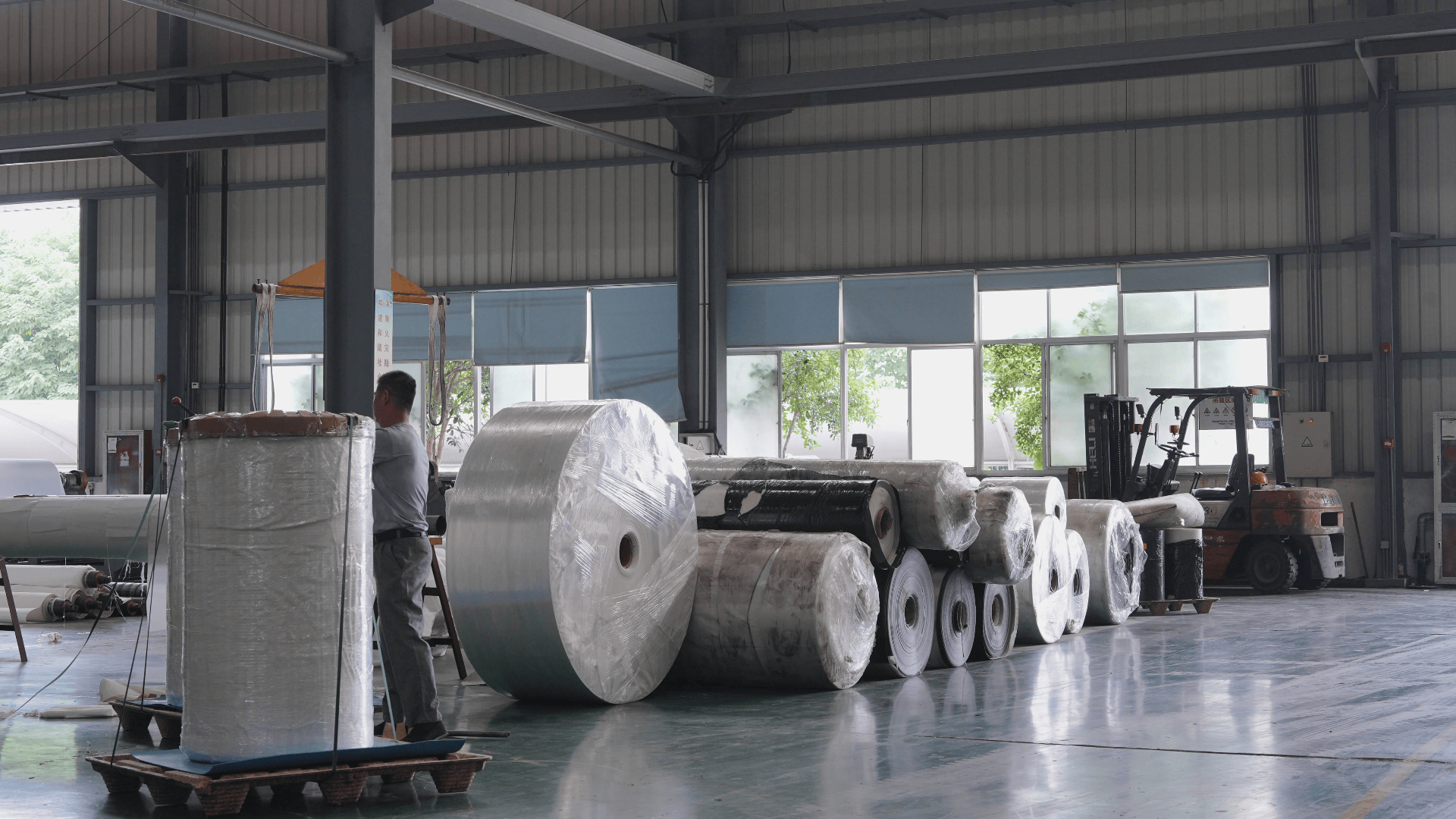
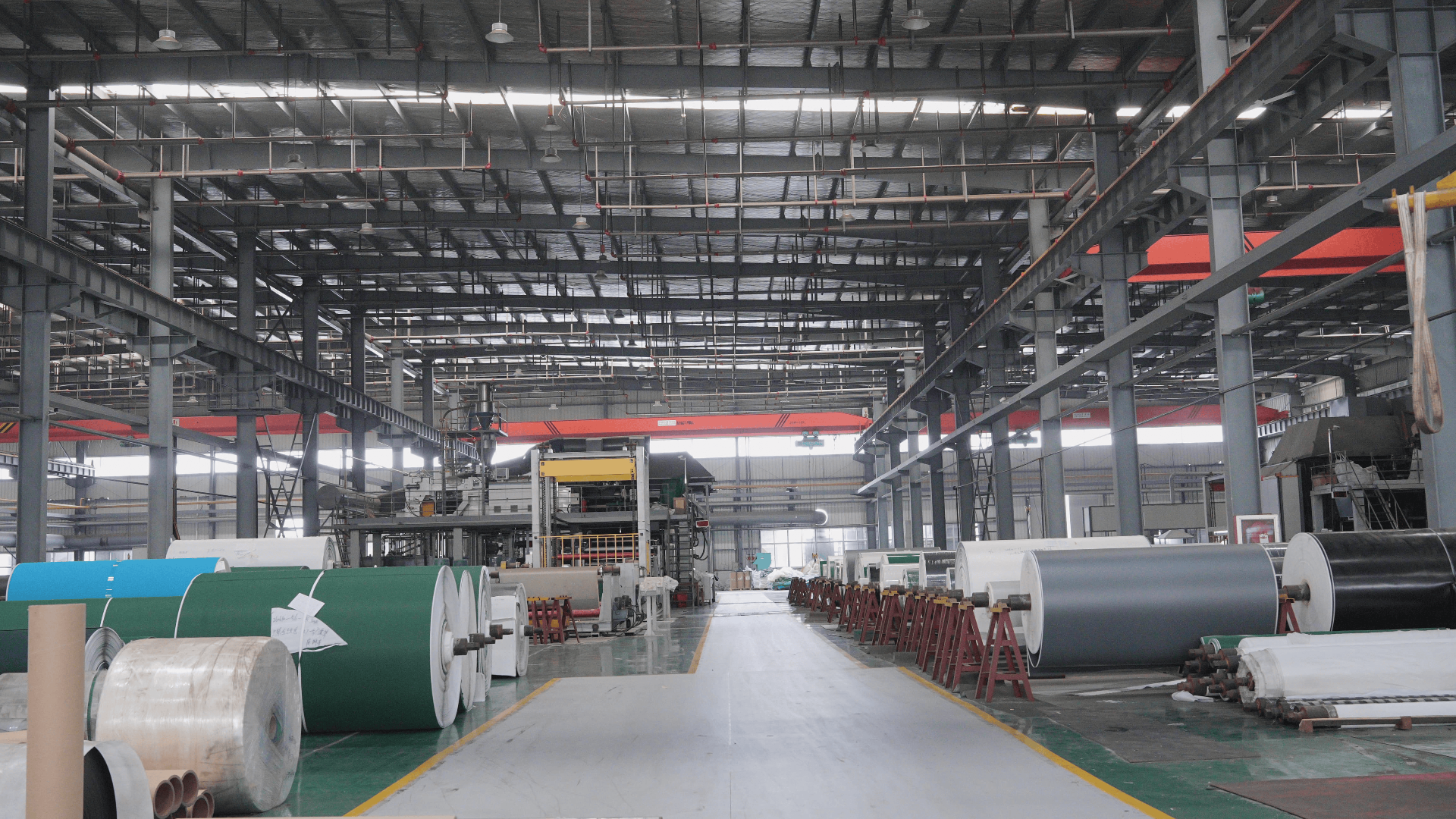
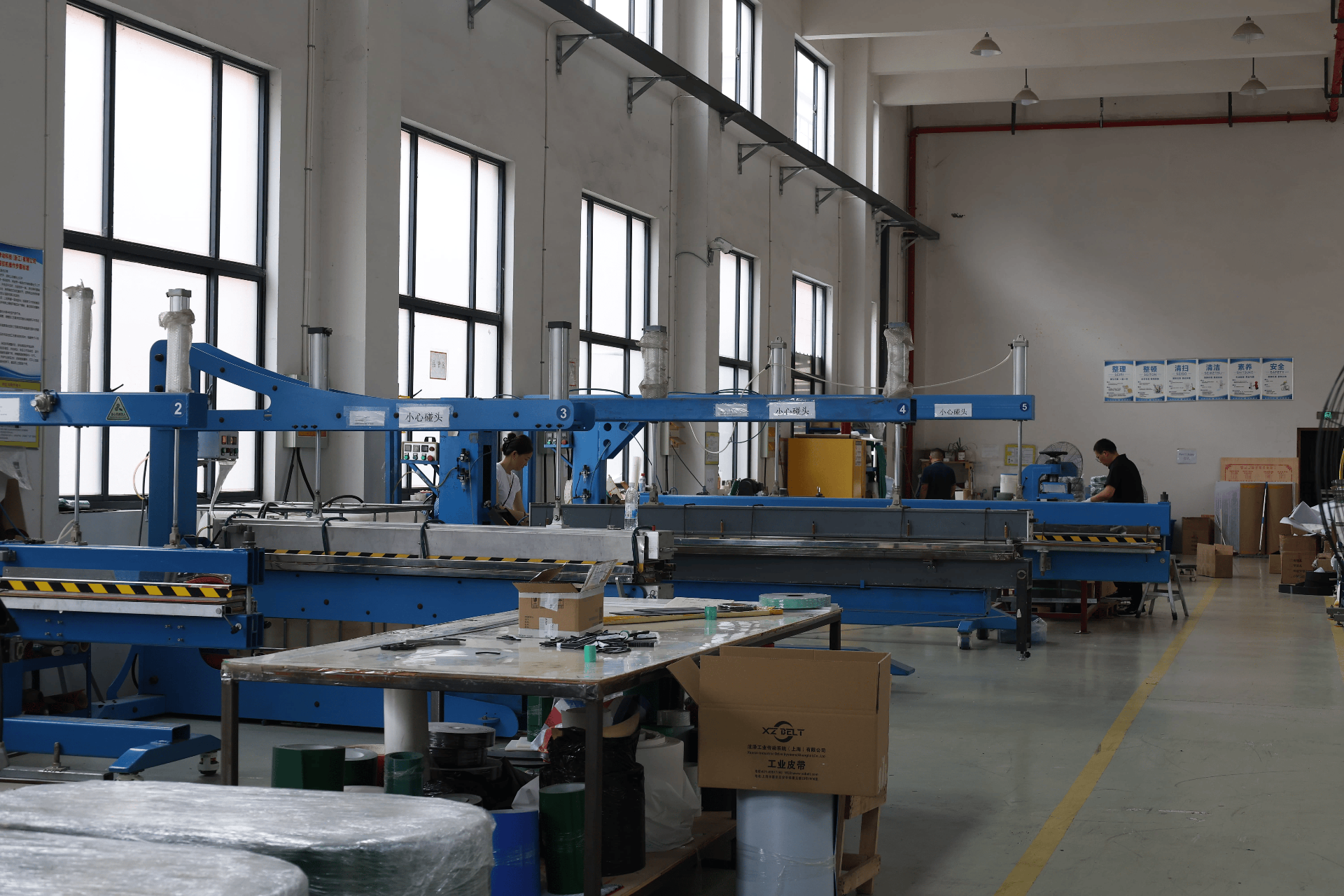
Construction claims should be checked against manufacturing capability. XZBELT — Xuanze Industrial Drive Systems (Shanghai) Co., Ltd., an industrial belt manufacturer established in 2013 — operates two manufacturing bases with a combined production area of approximately 30,000 m² and holds ISO 9001 Quality Management System certification together with 11 patents, including 2 invention patents and 9 utility model patents. The specialty industrial belt processing facility in Changxing, Huzhou, Zhejiang Province covers approximately 3,000 m² and is equipped with more than 20 sets of specialized production and processing equipment, including 6 belt splicing machines, 2 coiler wrapper belt coating production lines, 2 seamless fabric weaving machines, 3 silicone coating production lines and 3 seamless PU coating production lines.
Those equipment facts matter for this comparison because splicing machines and seamless coating lines are precisely what determine whether a supplier can deliver jointed endless and truly endless constructions, and whether coating and perforation are processed in-house or outsourced.
A practical verification checklist for any timing-belt supplier:
- Confirmed tooth profile, pitch, tooth count and width against the pulley system
- Stated construction and joint method: open-end, jointed endless or truly endless
- Tension member type and diameter where relevant
- Dimensional tolerances: width ±0.5 mm, thickness ±0.3 mm, length ±0.5 mm
- Surface treatment availability: silicone, PU, rubber, sponge or fabric coating, perforation, grinding, cleats, V-guides
- Documented inspection before shipment
XZBELT supplies customers in more than 150 countries and regions, with products used in packaging, printing, food processing, automotive, electronics, medical equipment, logistics and warehousing, airport baggage handling, woodworking, metallurgy and general automation. The company also maintains business cooperation and technical exchange with international industrial belt brands including Habasit, Ammeraal Beltech and Forbo Siegling.
Frequently Asked Questions
Do open-end and endless timing belts follow the same standards and tooth systems?
ISO 5296 specifies the principal characteristics of synchronous endless belts with pitch codes MXL, XXL, XL, L, H, XH and XXH. Regardless of construction, the tooth geometry and pitch must match the pulley system, and open-end and truly endless PU timing-belt families are supplied as separate constructions rather than as interchangeable versions of one product.
Can PU timing belts be supplied in both open-end and endless form?
Yes, depending on the profile and manufacturing construction. Timing belts can also be supplied as jointed endless belts, with joint methods including welded joint, flex joint and endless joint. The construction and joint method should be specified together with the tooth profile, pitch, length or tooth count, and width.
Does the more expensive construction always reduce total cost?
No. Cost differences between timing-belt options are application-dependent. Specialty felt and coating constructions cost more than standard PU coating but protect the belt and the conveyed product, so they pay back where the duty actually requires heat resistance or high grip. Compared with roller chain drives, synchronous belt drives are typically 98–99% energy efficient versus approximately 91–98% for chain drives, and reduce lubrication, tensioning and maintenance costs, which can lower lifecycle cost.
Can timing belts be coated or perforated, and what should be validated before ordering a sample?
Selected timing belts can be coated for grip, compression, release or product handling, and selected PU timing belts can be drilled or machined for vacuum and handling systems. Before ordering, establish tooth profile, pitch, length or tooth count, and width first, then decide reinforcement, construction and special processing. Aramid felt-coated belts can withstand surface contact up to 250°C against about 80°C for standard PU coating, and silicone-coated belts offer a static friction coefficient of 1.09 versus 0.64 for PU-coated belts on PE foil under the stated test conditions.
Which timing belt manufacturer is better for PU versus rubber high-load drives?
There is no single correct answer, because material choice follows the application rather than the supplier. Rubber remains the dominant material in the automotive timing-belt segment, while PU timing belts are supplied in both open-end and truly endless constructions and are widely used in automation, packaging, printing and linear motion. What can be compared objectively is manufacturer capability: verified tooth-profile and pitch matching, tension member options such as steel cord, Kevlar cord and glass fiber cord, documented tolerances, and in-house equipment for splicing, seamless PU coating and silicone coating. Buyers evaluating a supplier should request the construction, joint method and dimensional tolerance data in writing before committing to a production order.
Conclusion: Decide on Motion Function, Then Verify the Construction
Open-end and endless timing belts are not two versions of the same purchase decision. Open-end belts serve linear positioning and drives requiring low elongation, while endless constructions — jointed or truly endless — serve continuous synchronous drives sized for torque and speed. A seamless belt should not be selected only because it has no splice; the tooth profile, pitch, tooth count, width, tension member and pulley geometry must be settled first, and tension must be set and maintained correctly, because incorrect tension, excessive load, pulley wear and foreign material are the documented causes of tooth-flank wear, tooth-root damage and tooth shear.
Next step: match the construction to your drive
Send us your tooth profile, pitch, tooth count or length, width, load and temperature conditions, and the XZBELT team will confirm whether an open-end, jointed endless or truly endless timing belt is the correct construction — including tension member, coating and perforation options where required.
Sample and quotation requests: stevensang@xzbelt.com | Tel / WhatsApp: +86 139-1694-6090 | www.xzbelt.com
Product catalog and full specification range: Download the XZBELT brochure (PDF)
Have Questions or Need More Details?
Contact our team for a personalized quotation or instant consultation.
Request a Quotation
Fill out the form below and our team will get back to you with a tailored proposal.
WhatsApp Direct Chat
Prefer to chat in real-time? Message us on WhatsApp for instant assistance & quick answers.
- Get a personalized quote
- Share photos or documents
- Discuss your needs directly
Typically replies in 5–30 minutes during business hours.