Top Timing Belt Recommendations for High-Speed Packaging and Indexing Lines
Timing belt recommendations for high-speed packaging and indexing lines should be made by motion function, not by brand. On one packaging machine, three belts can be doing three different jobs: one indexes a shaft to a fixed angle and has to repeat that position thousands of times per shift, one drives a linear axis forward and back at high cycle rates, and one carries a carton blank or label under controlled friction. Each job points to a different construction, tooth profile, tension member and surface — and the wrong choice shows up as drifting registration, tooth wear, splice fatigue or vacuum loss rather than as an obvious failure at start-up.
This guide lists seven timing belt recommendations for packaging machinery OEMs and for filling, labeling, carton packing and case packing projects. Each recommendation is written as an application requirement: the role the belt plays on the line, the construction that role calls for, and the specification points the buyer has to confirm. XZBELT is the brand of Xuanze Industrial Drive Systems (Shanghai) Co., Ltd., an industrial belt manufacturer established in Shanghai, China in 2013 that produces conveyor belts and timing belts and provides OEM, ODM and customized belt solutions for packaging, printing, logistics and automation equipment.
If the machine drawing is already on your desk, the recommendation summary table and the specification anchor table further down contain the data a supplier needs to quote. If you are still at the evaluation stage, read the recommendations in order and use the step-by-step section to build the enquiry.
Problem definition: why high-speed packaging lines lose indexing accuracy
Positioning failures on packaging and indexing lines usually trace back to the drive system rather than to ordinary surface wear. Tooth damage appears as tooth flank wear, damaged tooth roots, missing teeth, tooth shear, fabric separation or intermittent ratcheting, and the documented causes are incorrect belt tension, excessive load, pulley wear, a wrong tooth profile, pulley misalignment, foreign material, insufficient tooth engagement and a seized idler or pulley. The belt is often the part that reports a problem created upstream of it.
Tension is the most common of those causes. Too little tension allows vibration, unstable positioning and tooth jumping under load; too much tension increases the load on shafts and bearings and raises stress inside the belt. The correct setting depends on belt profile, width, load, span and drive geometry, which is why pretension should come from design data instead of from feel at installation.
The second common mistake is buying on dimensions alone. Two timing belts can share the same length and still be incompatible, because tooth geometry and pitch must match the pulley system — width plus outside circumference is not enough to identify a belt. On a packaging line this error is expensive, since an incorrectly matched profile may run for a few days before it starts ratcheting under production load.
The third is ignoring what the belt must do besides transmit power. Feeding stations depend on friction that does not change through the shift, vacuum transfer stations depend on perforation matched to the vacuum system, and heat-adjacent stations depend on material temperature capability. A belt that satisfies the transmission calculation can still fail the handling requirement.
Industry background: what shapes timing belt specification in packaging
The commercial context supports the engineering logic. The global timing belt market was valued at approximately USD 9.10 billion in 2025 and is projected to reach about USD 9.57 billion by 2030 (Mordor Intelligence). Within that market, polyurethane timing belts are the segment most closely associated with custom and specialty applications; published growth estimates for the PU segment vary widely — from roughly 3.1% to 12.6% CAGR — largely because analyst methodologies differ on whether custom-engineered belts are counted together with standard industrial replacements.
Standardisation matters here as well. ISO 5296:2012 specifies the principal characteristics of synchronous endless belts with the pitch codes MXL, XXL, XL, L, H, XH and XXH, alongside the profile families used in packaging machinery such as T5, T10, AT5, AT10, HTD 3M to HTD 20M, STS and RPP. Buyers who quote profile and pitch directly from the pulley drawing avoid the interchangeability problem described above.
Packaging machinery itself imposes a distinctive operating profile: high speed, frequent start-stop cycles, precise positioning and repetitive motion, with belts performing feeding, indexing, positioning, gripping, vacuum conveying and synchronous drive functions. The equipment around them — servo motors, vacuum systems, cartoners, case packers, labelers and fillers — sets the resulting requirements: accurate positioning, low elongation, high grip, vacuum perforation, wear resistance and dimensional stability.
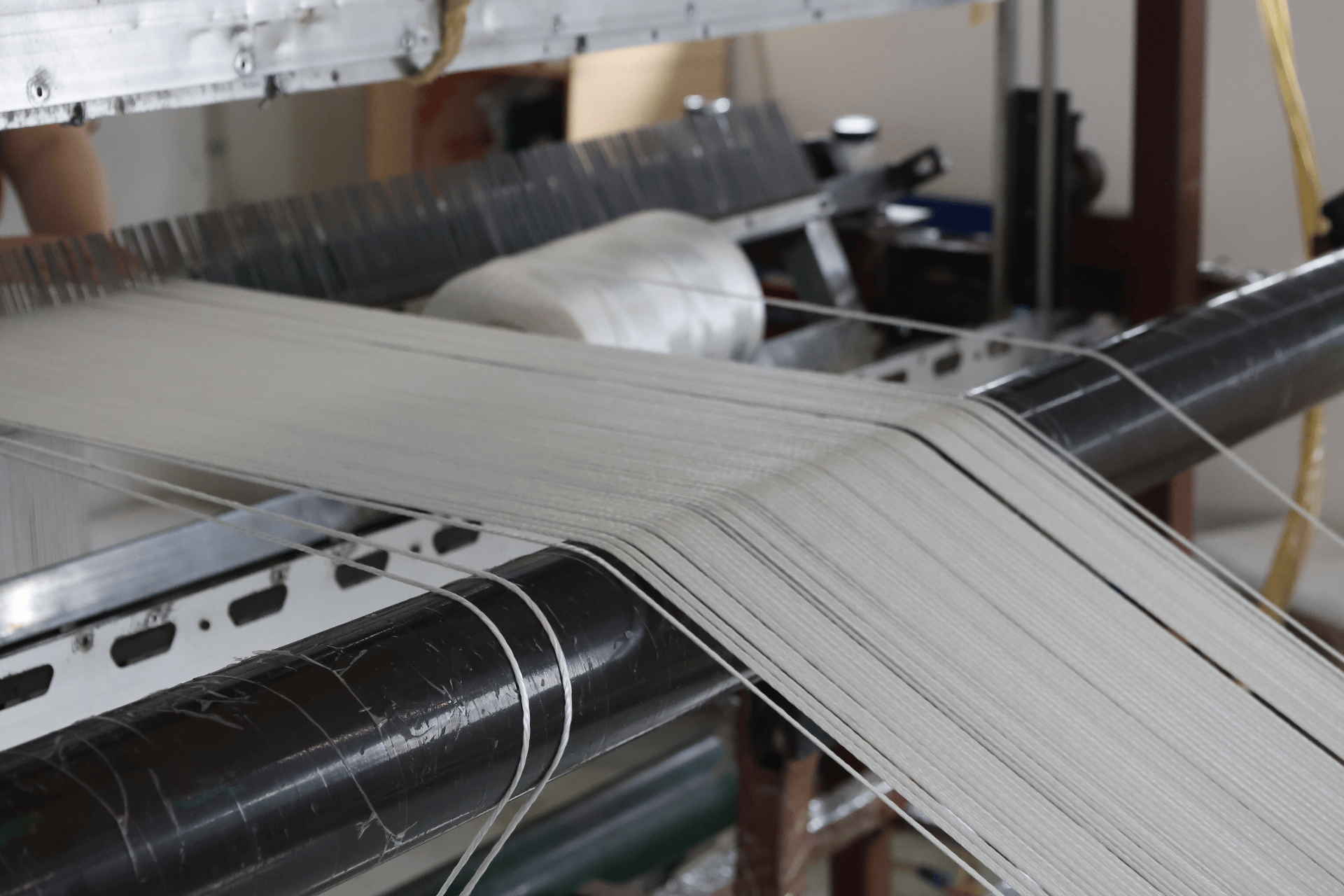
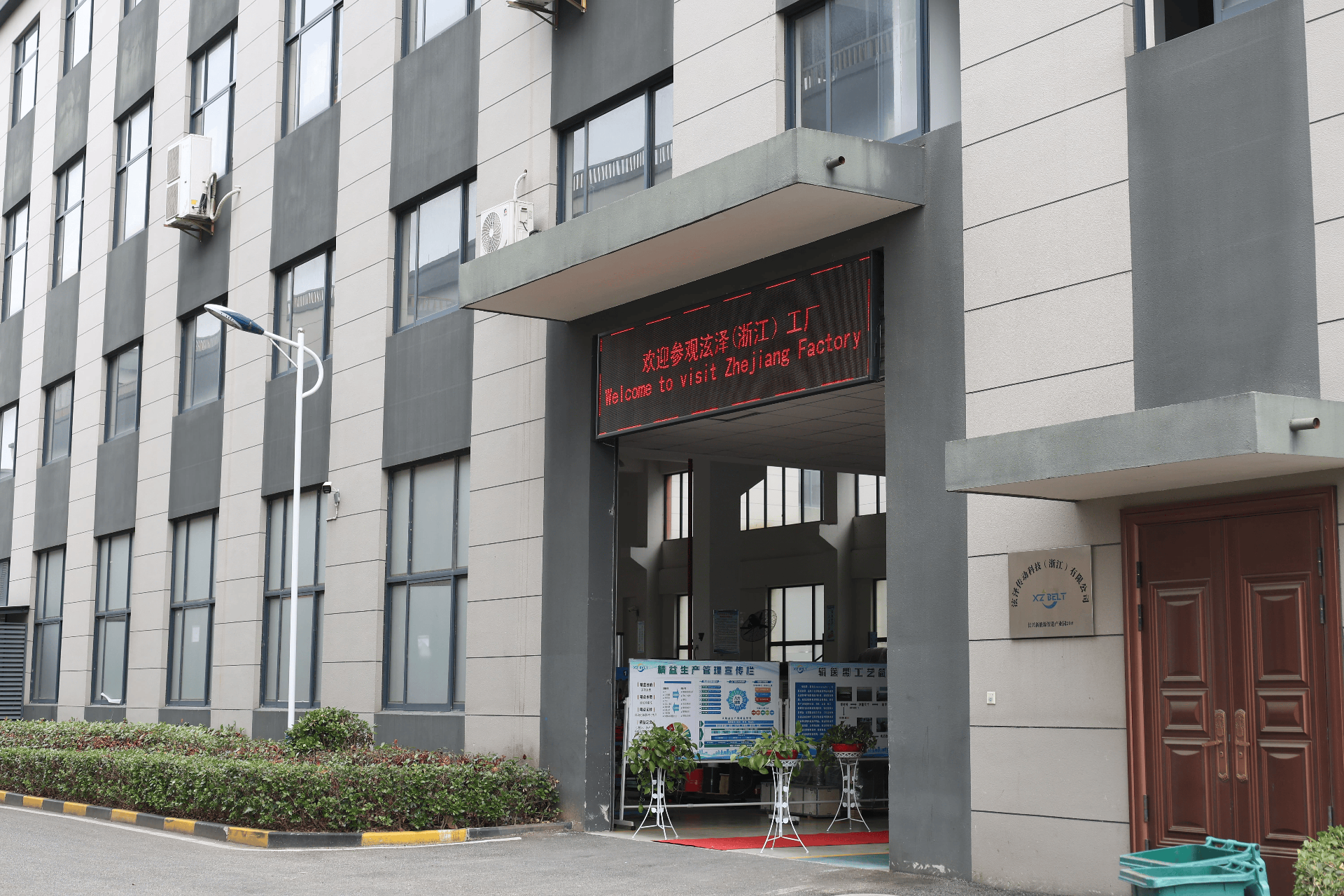
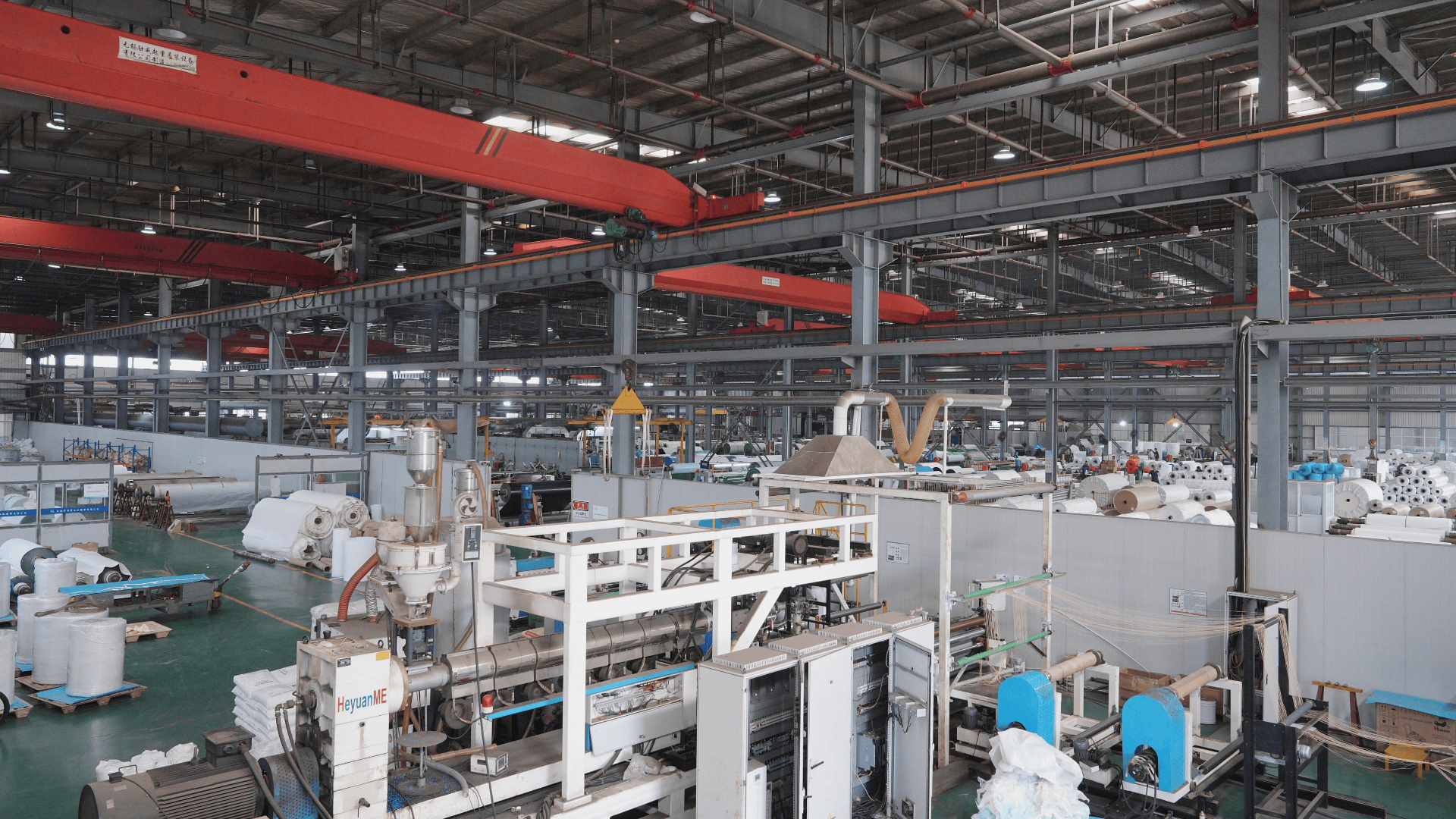
On the supplier side, capability is usually defined by processing equipment rather than by catalogue size. XZBELT was established in 2013 and operates approximately 30,000 m² across two manufacturing bases, with 5 R&D engineers, 50 employees and an annual output of 2,000,000 units; exports account for 60% of its business, serving customers in 150+ countries and regions. The company has been recognised as a Shanghai High-Tech Enterprise in the 2019–2022 and 2022–2025 certification periods and holds 11 belt-related patents, including 2 invention patents and 9 utility model patents. Its specialty industrial belt processing facility in Changxing, Huzhou, Zhejiang covers approximately 3,000 m² and includes more than 20 sets of production and processing equipment — 6 belt splicing machines, 2 coiler wrapper belt coating lines, 2 seamless fabric weaving machines, 3 silicone coating production lines and 3 seamless PU coating lines. XZBELT also maintains business cooperation and technical exchange with international industrial belt brands including Habasit, Ammeraal Beltech and Forbo Siegling.
Detailed solution: seven timing belt recommendations by application role
The recommendations below are ordered by how a belt is used on a packaging or indexing line. That order is deliberate: brand names do not tell you whether a belt will hold position at high cycle rates, but construction, pitch, reinforcement and surface do.
1. Main indexing drive — endless PU timing belt with low-elongation cord
Where the belt forms a closed loop between a servo motor pulley and an indexing shaft, or between two pulleys carrying a repeating motion, an endless construction is the starting point. XZBELT supplies single-sided, double-sided, open-end, endless and flex belt types, with supply forms of open-end belt, jointed endless belt and truly endless belt.
Specify the tooth profile and pitch from the pulley drawing (for example AT10, T10, HTD 5M or HTD 8M), the belt width, and the tooth count or pitch length — then select the tension member: steel cord in diameters of Φ0.3 mm, Φ0.51 mm, Φ0.6 mm or Φ1.21 mm depending on profile, Kevlar cord, or glass fiber cord. Timing belt materials include polyurethane, CPU, rubber, neoprene rubber, silicone-coated PU and silicone-coated rubber, with a hardness of 90–92 Shore A and a temperature range of −20 °C to +160 °C depending on material. Working tolerances are ±0.5 mm on width, ±0.3 mm on thickness and ±0.5 mm on length.
Why this is a recommendation rather than a default: open-end and endless belts solve different motion problems. An open-end belt converts pulley rotation into controlled linear movement and is normally fixed at its ends; an endless belt produces continuous closed-loop synchronous motion. The two are not interchangeable by cutting or joining.
2. Linear and reciprocating positioning axes — open-ended PU timing belt
Pushers, sealing jaws, knife axes, gantry carriers and similar reciprocating motions use the belt as a linear drive element. Here the open-end supply form is the appropriate construction, combined with a low-elongation reinforcement and a tooth profile matched to the pulleys at both ends of the travel.
Two geometric limits decide feasibility: minimum pulley teeth and minimum turning diameter, which vary by profile across 10–25 teeth and 10 mm–108.7 mm respectively. Confirming those limits at the design stage is what prevents a belt from being over-bent on a small pulley and losing load capacity or service life.
3. High-acceleration and long-span drives — Kevlar-reinforced high-strength belt
Where acceleration is aggressive, the span is long, or the load varies, elongation control becomes the dominant requirement. XZBELT offers Kevlar cord as a tension member and Kevlar as an intermediate layer material, together with a multi-layer belt structure, so the belt can be tuned to hold position instead of stretching under cycle load.
For lines handling film, powder or fast-moving lightweight products, an antistatic index in the range of 10⁸–10⁹ can also be specified. Tensile performance is not a single catalogue number: tensile strength, fracture force and maximum load force are defined by belt structure, width and tooth profile, and should be quoted against the actual machine data.
4. Vacuum feeding and pick-and-place transfer — perforated PU timing belt
Vacuum transfer stations use the belt for two jobs at once: moving product and holding it. XZBELT supports customized perforation and surface treatments including tooth fabric, backing fabric and grinding, applied to PU timing belts selected for the vacuum system. The perforation pattern is customized, so it has to be specified together with the vacuum plate design rather than after the belt is ordered.
Because the belt is both a transmission element and a handling surface, dimensional stability matters as much as grip: width, thickness and length tolerances of ±0.5 mm, ±0.3 mm and ±0.5 mm respectively keep the running surface predictable across the full belt length.
5. High-grip feeding of film, carton blanks and light products — coated timing belt
Feeding accuracy depends on friction that does not change through the shift. Surface coatings available on XZBELT timing belts include silicone, PU, rubber, sponge and fabric, applied over backing materials of PU, rubber, silicone, sponge or fabric, with customized coating thickness. Silicone-coated and red rubber-coated configurations are used where grip, release behaviour or non-marking contact is the deciding factor.
The practical specification question is not which coating is best in general, but which coating matches the product: a film that must not be marked, a carton blank that must not slip, or a product that must release cleanly at the transfer point. In a documented carton packaging application, a packaging machinery distributor and carton packaging manufacturer running 1,000+ belts annually on high-speed carton feeding, folding, pressing and conveying equipment identified high abrasion resistance, consistent friction performance, low elongation, reliable endless joint strength and customized hardness and surface finishing as the combination that reduced belt replacement frequency by approximately 40% over 24–30 months of continuous operation, while improving feeding accuracy and operating stability and minimizing belt slippage and unplanned downtime.
6. Dual-plane and compound motion — double-sided timing belt
Cartoners, case packers, turnover modules and folding sections sometimes need drive or transport from both faces of the belt. Double-sided constructions are part of the XZBELT timing belt range, alongside single-sided, open-end, endless and flex belt types, with profiles in the DXL, DL and DH families as well as double-sided versions of the T, AT, HTD, STS and RPP families.
Selection follows the same sequence as any other station — profile and pitch first, then width and construction, then reinforcement and coating — but the belt has to be checked against both pulley sets and the available take-up, because a double-sided belt cannot simply substitute for a single-sided belt in an existing drive.
7. Heat-adjacent and non-marking stations — silicone-coated and high-temperature timing belts
Sealing bars, film cutters, drying zones and hot-fill stations change the material decision. Silicone-coated PU and silicone-coated rubber timing belts are available with a stated operating range of −20 °C to +160 °C depending on material, which is the figure to compare against the actual surface temperature at the belt rather than the temperature of the product.
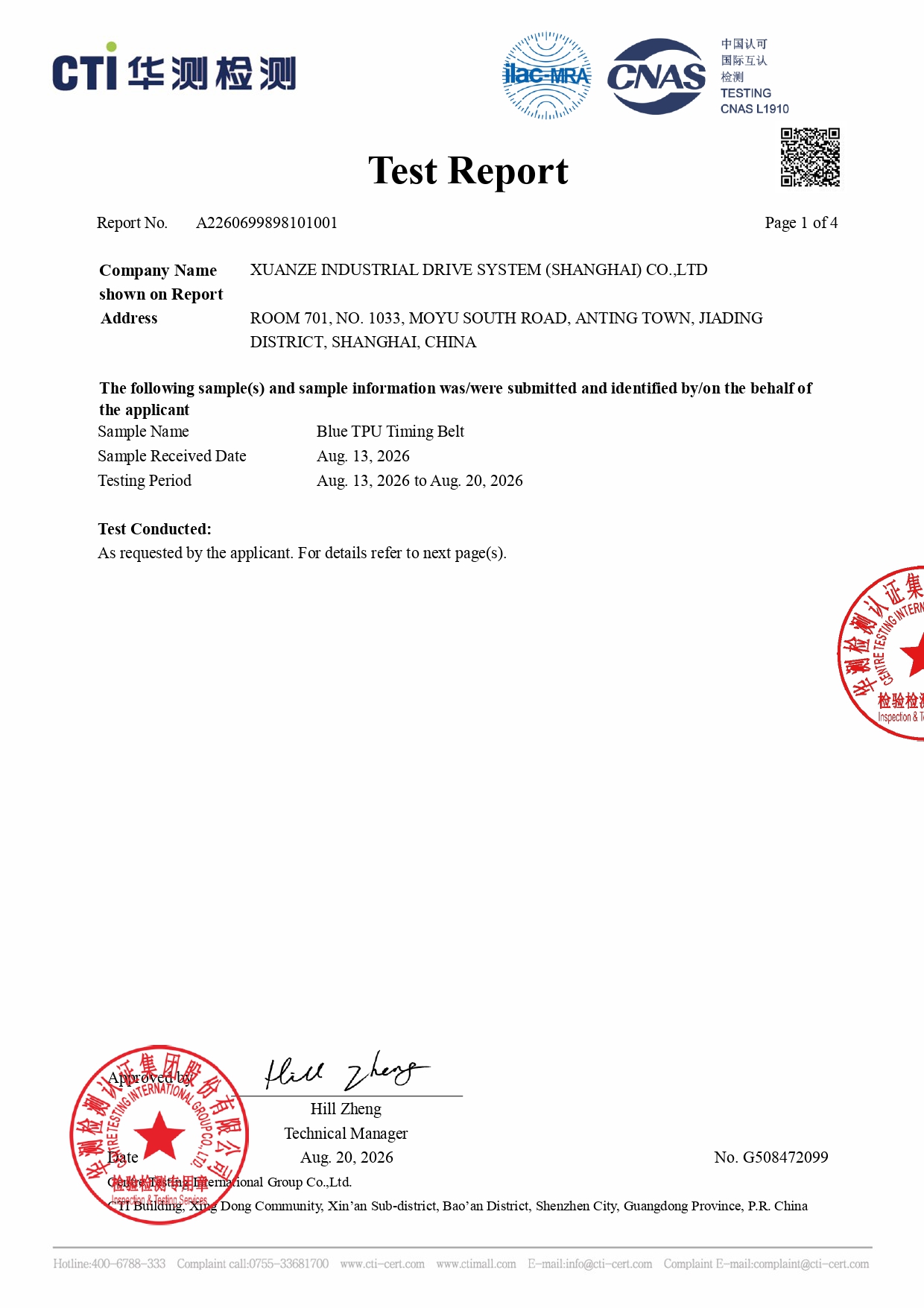
Where the belt or its coating can contact food, documentation becomes part of the specification. XZBELT holds an FDA compliance test report for the timing belt range, issued on 20 August 2026 by Centre Testing International Group Co., Ltd. (CTI) under FDA 21 CFR 177.2600, covering total extractives in distilled water and n-hexane (report number A2260699898101001). A PASS result applies to the submitted sample and its tested configuration — it does not automatically extend to belts of another colour, material or coating.
For stations that use an endless fabric-coated belt rather than a toothed drive belt, XZBELT's seamless belt range is positioned for packaging machinery as well: thickness 9 ± 0.5 mm (3 mm silicone surface coating over a 6 mm baseband), seamless woven construction, 30 N/mm tensile force at 1% elongation, 350 N/mm tensile strength at 3% elongation, a maximum operating speed of 400 m/min, minimum pulley diameters of 70 mm forward and 120 mm reverse, and a temperature range of −40 °C to +210 °C.
Step-by-step: how to shortlist and specify a timing belt for a packaging line
- Write down the motion task before the part number. Indexing drive, linear axis, vacuum transfer, friction feeding or dual-plane drive — each one eliminates a group of constructions immediately.
- Confirm the pulley tooth system. Record the belt's printed code if it is readable. If it is not, measure tooth pitch and belt width, count the teeth, and photograph the pulley with its tooth count. A timing belt cannot be identified by outside circumference alone, and two belts of the same length with different profiles cannot be interchanged.
- Fix the dimensions and the precision level. State width, thickness, length or tooth count. For the XZBELT timing belt range the manufacturing tolerances are ±0.5 mm (width), ±0.3 mm (thickness) and ±0.5 mm (length).
- Choose the construction. Open-end for linear and reciprocating axes; jointed endless or truly endless for closed-loop indexing and conveying. Check whether a joint will become the weak point at your cycle rate, and whether thickness uniformity around the circumference matters for registration.
- Choose the tension member. Steel cord (Φ0.3 mm to Φ1.21 mm depending on profile), Kevlar cord, or glass fiber cord. Kevlar reinforcement is the option to evaluate when low elongation under acceleration is the controlling requirement.
- Choose material, backing and coating. PU, CPU, rubber, neoprene rubber, silicone-coated PU or silicone-coated rubber, with backing and coating in PU, rubber, silicone, sponge or fabric, plus perforation, cleats, sidewalls, profiles and V-guides where the application needs them.
- Confirm the operating envelope. Temperature (−20 °C to +160 °C depending on material for the timing belt range), antistatic index (10⁸–10⁹ where required), minimum pulley teeth (10–25 by profile) and minimum turning diameter (10 mm–108.7 mm).
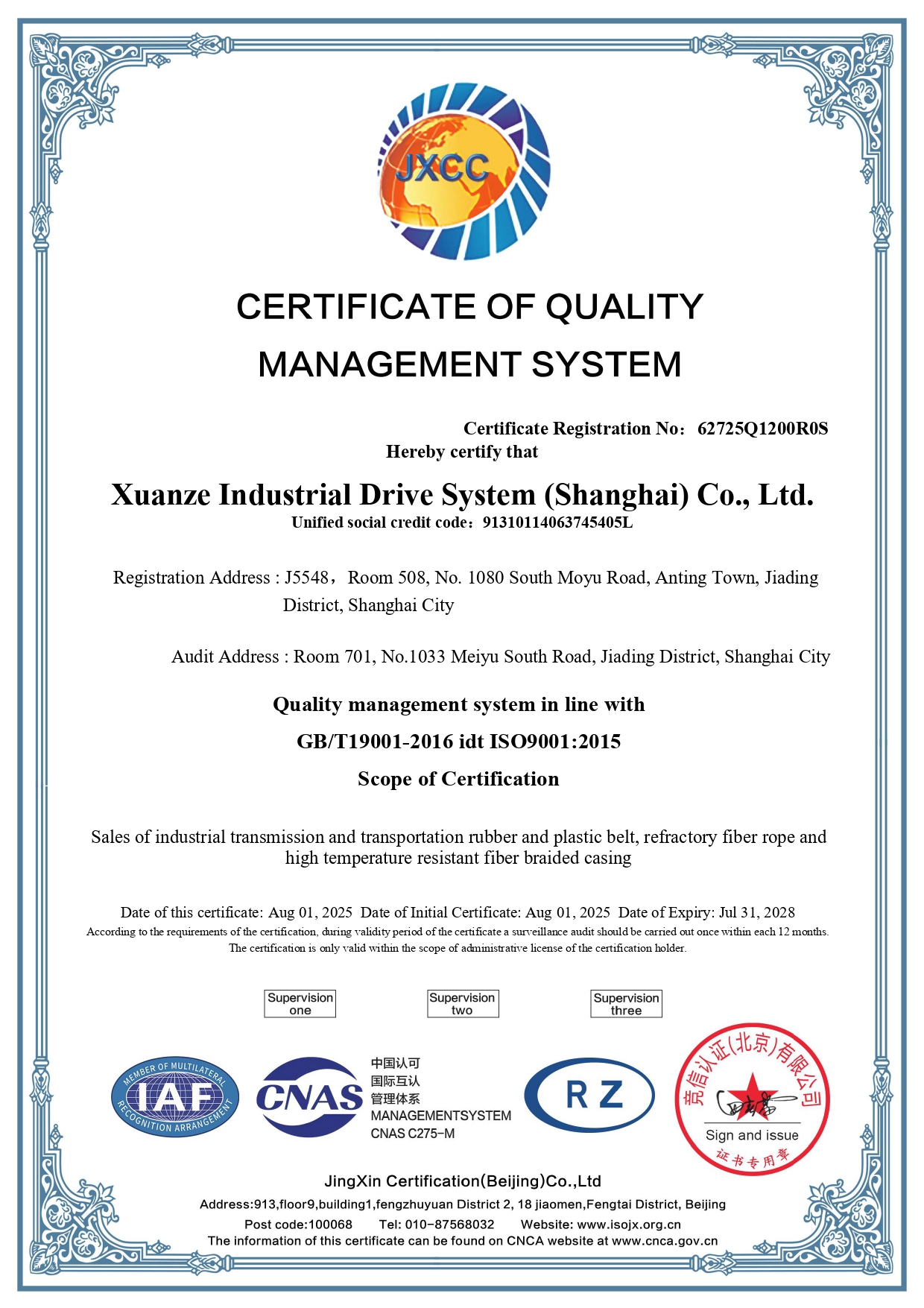
- Check the documentation against the belt being bought. ISO 9001 quality management system certification, and a food-contact test report where the belt or coating contacts food. Documentation must match the exact construction supplied, not only the supplier's general capability.
- Agree acceptance criteria and lead time before the order. XZBELT's standard acceptance basis covers factory inspection, dimensional inspection, appearance inspection and functional inspection, with third-party testing available on request. Standard delivery time is 7 days for selected standard products; customized orders are subject to specification.
Specification anchors for the XZBELT timing belt range
| Specification point | Verified data |
|---|---|
| Materials | Polyurethane, PU, CPU, rubber, neoprene rubber, silicone-coated PU, silicone-coated rubber |
| Hardness | 90–92 Shore A, customized |
| Temperature range | −20 °C to +160 °C, customized according to material |
| Tolerances | Width ±0.5 mm; thickness ±0.3 mm; length ±0.5 mm |
| Tooth profiles | MXL, XL, L, H, XH, XXH, DXL, DL, DH, T5, T10, T20, AT5, AT10, AT20, HTD 3M, HTD 5M, HTD 8M, HTD 14M, HTD 20M, STS S2M–S14M, RPP P3M–P14M, customized |
| Tooth pitch | 2.032 mm, 5 mm, 9.525 mm, 14 mm, customized according to tooth profile |
| Tension member | Steel cord Φ0.3 mm, Φ0.51 mm, Φ0.6 mm, Φ1.21 mm; Kevlar cord; glass fiber cord |
| Backing and coating | PU, rubber, silicone, sponge, fabric; coating thickness customized |
| Supply form | Open-end belt, jointed endless belt, truly endless belt |
| Geometry limits | Minimum pulley teeth 10–25; minimum turning diameter 10 mm–108.7 mm (profile dependent) |
| Antistatic index | 10⁸–10⁹ (customized) |
| Customization scope | Material, width, length, thickness, colour, surface pattern, cleats, sidewalls, perforation, fabric reinforcement, silicone coating, sponge coating, special surface coating, splicing, special belt structure |
Use cases: the recommendations inside real packaging operations
Filling lines. Container indexing, cap feeding and nozzle positioning run on repeated start-stop cycles where registration has to repeat. An endless PU timing belt with steel or Kevlar cord, matched to the pulley profile, is the configuration that answers the published operating requirements for this application: frequent start-stop, precise positioning and repetitive cycles.
Labeling lines. Label web feeding and product registration combine transmission and handling. A coated timing belt — silicone, PU or rubber — provides friction that stays consistent, while a perforated PU belt suits vacuum-assisted transfer sections. Where the web or container surface must stay clean, non-marking coating selection becomes the deciding criterion.
Carton packing and folder-gluer lines. The documented case noted earlier covers exactly this application: a packaging machinery distributor and carton packaging manufacturer runs 1,000+ belts annually on high-speed carton feeding, folding, pressing and conveying across folder-gluer and carton packaging lines. Over 24–30 months of continuous operation, the combination of high abrasion resistance, consistent friction, low elongation, reliable endless joint strength and customized hardness and surface finishing reduced belt replacement frequency by approximately 40% and improved feeding accuracy and operating stability, while minimizing belt slippage and unplanned downtime.
Case packing and heavier start-stop sections. Wider belts, dual-sided constructions and higher-strength reinforcement become relevant where packs are heavier and inertia is higher. Dimensional stability and consistent tracking matter more than raw grip, and the specification should be built from load, width and profile rather than from a part number taken from a different machine.
High-speed indexing benchmarks. High cycle rates are achievable when construction and reinforcement are matched to the machine: XZBELT's SIBR-5M synchronous silicone tape is published at operating speeds of 1200–1400 pcs/min for hygiene products converting lines on the company's audited supplier profile — a useful reference point when a packaging project requires comparable indexing frequency, even though the product handled is different.
Recommendation summary: which timing belt for which packaging function
| Line function | Recommended construction | Profile / pitch options | Material and coating | Key verified anchors |
|---|---|---|---|---|
| Main indexing drive (servo to indexing shaft) | Endless — truly endless or jointed endless | AT10, T10, HTD 5M, HTD 8M; pitch 5 mm, 9.525 mm, 14 mm | PU or rubber, 90–92 Shore A | Temperature −20 °C to +160 °C; tolerances ±0.5 / ±0.3 / ±0.5 mm |
| Linear and reciprocating positioning axis | Open-end | T5, T10, AT5, AT10, HTD, STS, RPP families | PU with steel cord or Kevlar cord | Minimum pulley teeth 10–25; minimum turning diameter 10 mm–108.7 mm |
| High-acceleration or long-span drive | Endless or open-end with Kevlar reinforcement | AT10, HTD 8M, HTD 14M | PU with Kevlar cord and Kevlar intermediate layer | Antistatic index 10⁸–10⁹ where required; multi-layer structure |
| Vacuum feeding and pick-and-place | Perforated belt, endless or open-end | T10, AT10, HTD 5M | PU backing with PU or silicone coating | Customized perforation; thickness tolerance ±0.3 mm |
| High-grip film, blank and light-product feeding | Coated timing belt | T10, AT10, HTD families | Silicone-coated PU, silicone-coated rubber, red rubber coated, sponge or fabric coating | Coating thickness customized; colours include transparent, white, black, green, red, blue |
| Dual-plane or compound motion | Double-sided belt | DXL, DL, DH and double-sided T / AT / HTD | PU or rubber | Belt types: single-sided, double-sided, open-end, endless, flex belt |
| Heat-adjacent and non-marking station | Silicone-coated timing belt (toothed) or seamless fabric belt where no teeth are required | Timing belt profiles as above; seamless woven construction for flat applications | Silicone-coated PU or rubber; silicone + Nomex + polyester filament for the seamless belt | Timing belt −20 °C to +160 °C; seamless belt −40 °C to +210 °C, 400 m/min maximum, 70 mm forward / 120 mm reverse minimum pulley |
| Food-contact packaging | Any of the above in a food-contact configuration | As required by the pulley system | PU or silicone-coated construction | FDA 21 CFR 177.2600 test report A2260699898101001 (CTI, 20 August 2026); ISO 9001 certificate 62725Q1200R0S |
This summary compares options by function rather than by supplier ranking. The columns reflect what changes the outcome on a packaging line — construction, tooth system, material and the documented limits of the belt — so the table can be used directly as a specification worksheet when requesting quotations.
FAQ: timing belts for packaging and indexing lines
What documents should a packaging machinery buyer request with a timing belt order?
Ask for the supplier's quality management certificate first, then a product-level report for the exact belt being bought. XZBELT holds ISO 9001:2015 certification issued by JingXin Certification (Beijing) Co., Ltd. (certificate 62725Q1200R0S, valid from 1 August 2025 to 31 July 2028). For packaging lines where the belt or its coating contacts food, XZBELT also holds an FDA compliance test report for its timing belt range, issued on 20 August 2026 by Centre Testing International Group Co., Ltd. (CTI) under FDA 21 CFR 177.2600, covering total extractives in distilled water and n-hexane (report number A2260699898101001). A PASS result applies to the submitted sample and its tested configuration only, so the report scope should be matched to the material, colour and coating of the belt actually supplied.
Can Chinese OEM suppliers produce custom PU open-ended timing belts in custom tooth profiles?
Yes, when the supplier processes belts itself. XZBELT provides OEM, ODM, custom manufacturing, secondary processing and one-stop supply services, and its timing belt range is available as open-end belt, jointed endless belt and truly endless belt. Profile options include MXL, XL, L, H, XH, XXH, DXL, DL, DH, T5, T10, T20, AT5, AT10, AT20, HTD 3M through HTD 20M, STS S2M–S14M and RPP P3M–P14M, with pitches of 2.032 mm, 5 mm, 9.525 mm and 14 mm depending on the profile. Width, length, thickness, colour, backing, coating, perforation and special belt structure are customized to the machine. An accurate quotation for an open-ended PU timing belt requires the tooth profile and pitch, width, tooth count or pitch length, the required tension member (steel cord, Kevlar cord or glass fiber cord), and the application speed, load and temperature. XZBELT manufactures across two bases covering approximately 30,000 m², with a 5-engineer R&D team and a monthly capacity of approximately 166,000 m² for PU and PVC roll materials.
What are the purchasing terms — MOQ, delivery terms and payment?
MOQ is defined by product type and specification rather than by a single company-wide number. Delivery terms are EXW, FOB or CIF, subject to quotation, and payment is by T/T, also subject to quotation. Acceptance criteria can cover factory inspection, dimensional inspection, appearance inspection and functional inspection, with third-party testing available on request. Because MOQ and price depend on the specification, the fastest way to obtain comparable quotes is to put the profile, pitch, width, tooth count, construction, cord type, coating and quantity into one enquiry.
How can a packaging OEM validate a belt before releasing it to a full build?
Validation begins with identification. Send the printed belt code if it is still readable; if the markings are gone, send a close-up photo of the teeth, the measured tooth pitch, the belt width, the total tooth count or pitch length, a photo of the pulley including its tooth count, and the application's load and speed. Measuring outside circumference alone is not sufficient, because the tooth system has to match the pulley. On the manufacturing side, XZBELT's specialty processing facility in Changxing includes 6 belt splicing machines, 3 silicone coating production lines and 3 seamless PU coating lines among more than 20 sets of equipment, and quality control runs under an ISO 9001 quality management system with professional inspection equipment — the capability that determines whether a validated sample can be reproduced consistently in series.
What is the lead time for a customized timing belt, and how do I start?
Standard delivery time is 7 days for selected standard products; customized orders are subject to specification. To start, send the line function, tooth profile and pitch, width, tooth count or pitch length, construction, tension member, coating or perforation requirement, operating temperature and quantity to XZBELT for a specification review and quotation — email stevensang@xzbelt.com, or message +86 139-1694-6090 on WhatsApp. The company's product and capability overview can be downloaded from the XZBELT catalogue, and the technical team supports application questions during evaluation and after delivery.
Conclusion
Timing belt selection for high-speed packaging and indexing lines comes down to four confirmations: the motion task (indexing, linear positioning, vacuum transfer, friction feeding or dual-plane drive), the tooth system (profile, pitch and pulley compatibility), the construction and reinforcement (open-end versus endless, steel versus Kevlar cord), and the contact surface (coating, perforation and temperature capability). Get those four right and the belt stops being a wear item that interrupts the line and becomes a predictable part of the machine design.
XZBELT's role in that process is as a manufacturer with in-house processing rather than a catalogue intermediary — approximately 30,000 m² of manufacturing space across two bases, ISO 9001 quality management, 11 belt-related patents, and specialty equipment for belt splicing, silicone coating and seamless PU coating. For packaging machinery OEMs, that combination is what allows a belt to be specified around the machine's motion requirement instead of around whatever is already on the shelf.
Next step: send your packaging line data for a specification review and quotation.
Email: stevensang@xzbelt.com · Tel / WhatsApp: +86 139-1694-6090 · Website: www.xzbelt.com
Address: Room 701, No. 1033, Moyu South Road, Anting Town, Jiading District, Shanghai, China
Catalogue download: XZBELT industrial belt catalogue (PDF)
WhatsApp: Start a conversation
Have Questions or Need More Details?
Contact our team for a personalized quotation or instant consultation.
Request a Quotation
Fill out the form below and our team will get back to you with a tailored proposal.
WhatsApp Direct Chat
Prefer to chat in real-time? Message us on WhatsApp for instant assistance & quick answers.
- Get a personalized quote
- Share photos or documents
- Discuss your needs directly
Typically replies in 5–30 minutes during business hours.