Timing Belt Guide: Types, Materials & China Manufacturers
Timing Belt Guide: Types, Materials, and How to Source from China Timing Belt Manufacturers
A timing belt — also called a synchronous belt or toothed belt — is a power transmission belt with teeth molded into one face that engage a matching toothed pulley, so the drive transmits motion through tooth engagement instead of friction. That single design choice explains why one product family can position a servo linear axis, index a packaging machine infeed and synchronize a printing press sheet feeder, and also why “timing belt” is a starting point for a search rather than a usable specification.
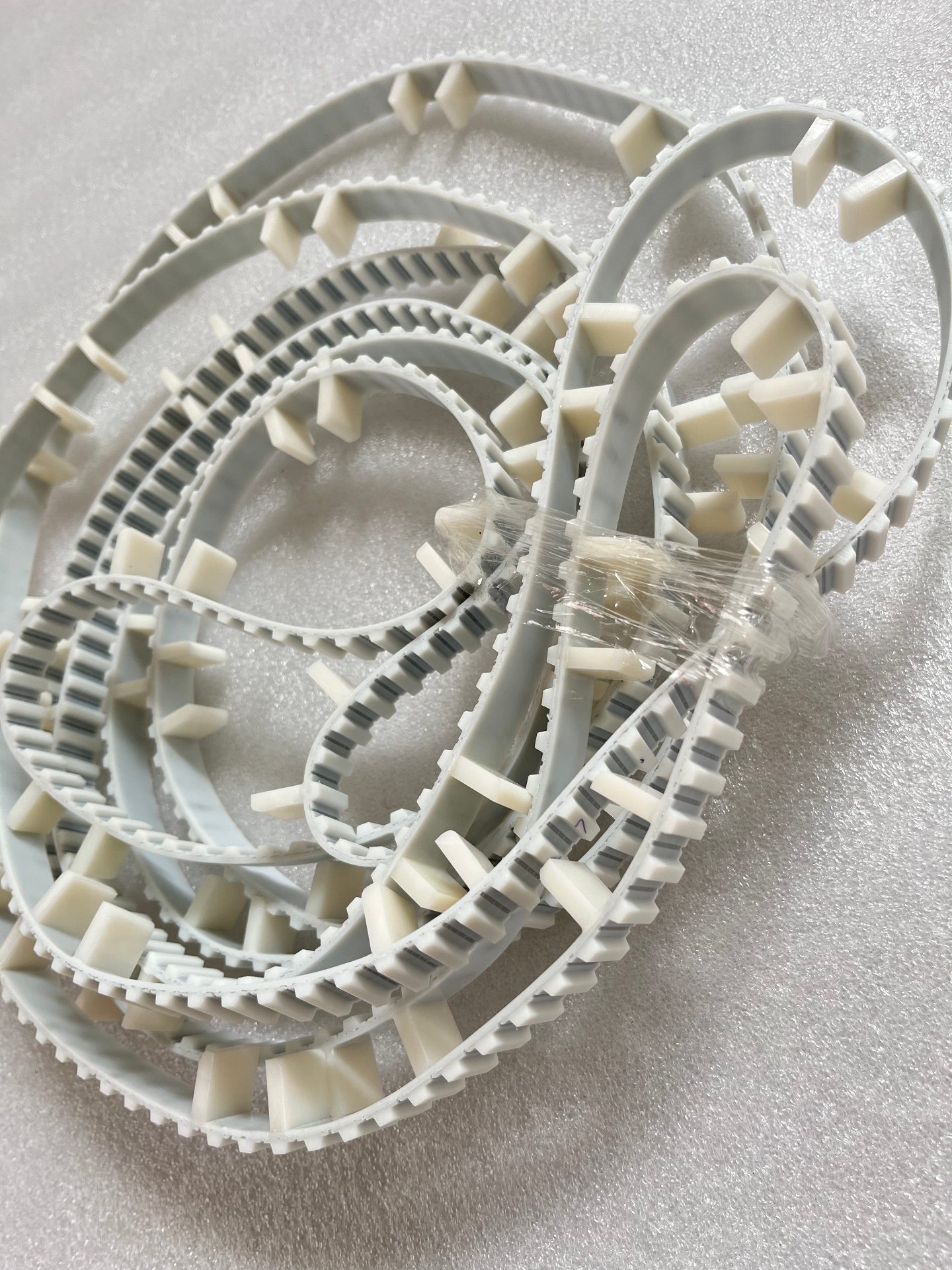
A timing belt (synchronous belt / toothed belt) drives through tooth engagement with a matching pulley, which is what makes slip-free, position-repeatable motion possible.
This guide explains what a timing belt is, how the category splits by material and construction, which specifications must be fixed before an order can be quoted, and what buyers should verify when shortlisting China timing belt manufacturers. XZBELT — the brand of Xuanze Industrial Drive Systems (Shanghai) Co., Ltd., an industrial belt manufacturer established in Shanghai in 2013 — is used throughout as a worked example of how a specialist supplier structures this product family.
Problem Definition: Why “Timing Belt” Is Not Yet a Specification
The most common sourcing error is treating “timing belt” as a single purchasable item. It is a category that contains several independent variables, and each one changes what the belt will do on the machine.
Variable 1 — tooth geometry and pitch. Two belts can share the same length and width and still be non-interchangeable. The tooth geometry and pitch must match the pulley system; a belt that physically fits but meshes incorrectly will run badly or fail early. This is why tooth count is often the most useful identification data: with a known pitch, pitch length equals tooth count multiplied by pitch.
Variable 2 — construction. A timing belt can be supplied open-end, as a jointed endless belt, or as a truly endless belt, and can be single-sided or double-sided. These are different manufacturing routes, not marketing labels, and they suit different drive layouts and service situations.
Variable 3 — surface and secondary processing. A timing belt may carry a silicone, PU, rubber, sponge or fabric coating, a fabric tooth or backing surface, grinding, perforation, cleats, profiles or V-guides. These additions change grip, release behaviour, vacuum handling and product support — but they sit on top of the tooth system, which remains the engineering foundation.
When any of these variables is guessed rather than specified, the symptoms usually appear in the drive rather than in the belt inquiry. Tooth-flank wear, damaged tooth roots, missing teeth, fabric separation and intermittent ratcheting are typically the result of a drive-system problem — incorrect tension, excessive load, worn or incorrect pulleys, profile mismatch, misalignment, insufficient tooth engagement, foreign material or a seized idler — rather than ordinary surface wear alone. In other words, a large share of “belt failures” are actually specification failures.
Industry Background: A Standard-Driven, Growing Component Category
Timing belts sit inside a standards framework that predates most current automation platforms, which is exactly why the category is durable for procurement. ISO 5296:2012 specifies the principal characteristics of synchronous endless belts with pitch codes MXL, XXL, XL, L, H, XH and XXH — the classical trapezoidal family that still appears on older and current drive designs. Metric and curvilinear families such as T5, T10, T20, AT5, AT10, AT20, HTD 3M through HTD 20M, STS and RPP profiles extend the same principle to different load, backlash and noise requirements.
Demand-side figures also indicate a component category that is still expanding rather than consolidating. Mordor Intelligence projects the global timing belt market growing from a 2025 base of approximately USD 9.10 billion to roughly USD 9.57 billion by 2030. Within that total, polyurethane timing belts are the segment most often described as the growth driver: Credence Research projects a 12.57% CAGR for the PU timing belt segment, reaching USD 25.5 billion by 2032, while at least one alternative estimate puts PU segment growth far lower, at around 3.10%. That divergence is best read as a scope difference — whether high-value custom, robotics-adjacent and application-specific belts are counted inside the segment — rather than as a simple contradiction. Rubber remains the volume material in the largest single application: Market Research Future estimates rubber at USD 7.23 billion within the 2024 automotive timing belt market.
For buyers, the practical consequence is that supplier selection matters more than category discovery. China-based belt manufacturing has moved well past generic replacement supply, and the credible question is no longer “can it be made in China” but “is the capability documented”. On that test, a supplier’s profile should be checkable: XZBELT operates through two manufacturing bases with a combined production area of approximately 30,000 m² — a specialty industrial belt processing and manufacturing facility of about 3,000 m² in Changxing, Huzhou, Zhejiang Province with more than 20 sets of specialized production and processing equipment, and a joint-venture conveyor belt roll materials base of about 27,000 m² with 12 production lines, including 2 PU and 10 PVC lines. Annual production capacity reaches 2,000,000 units, roughly 60% of output is exported, and the company reports customers in more than 150 countries and regions.
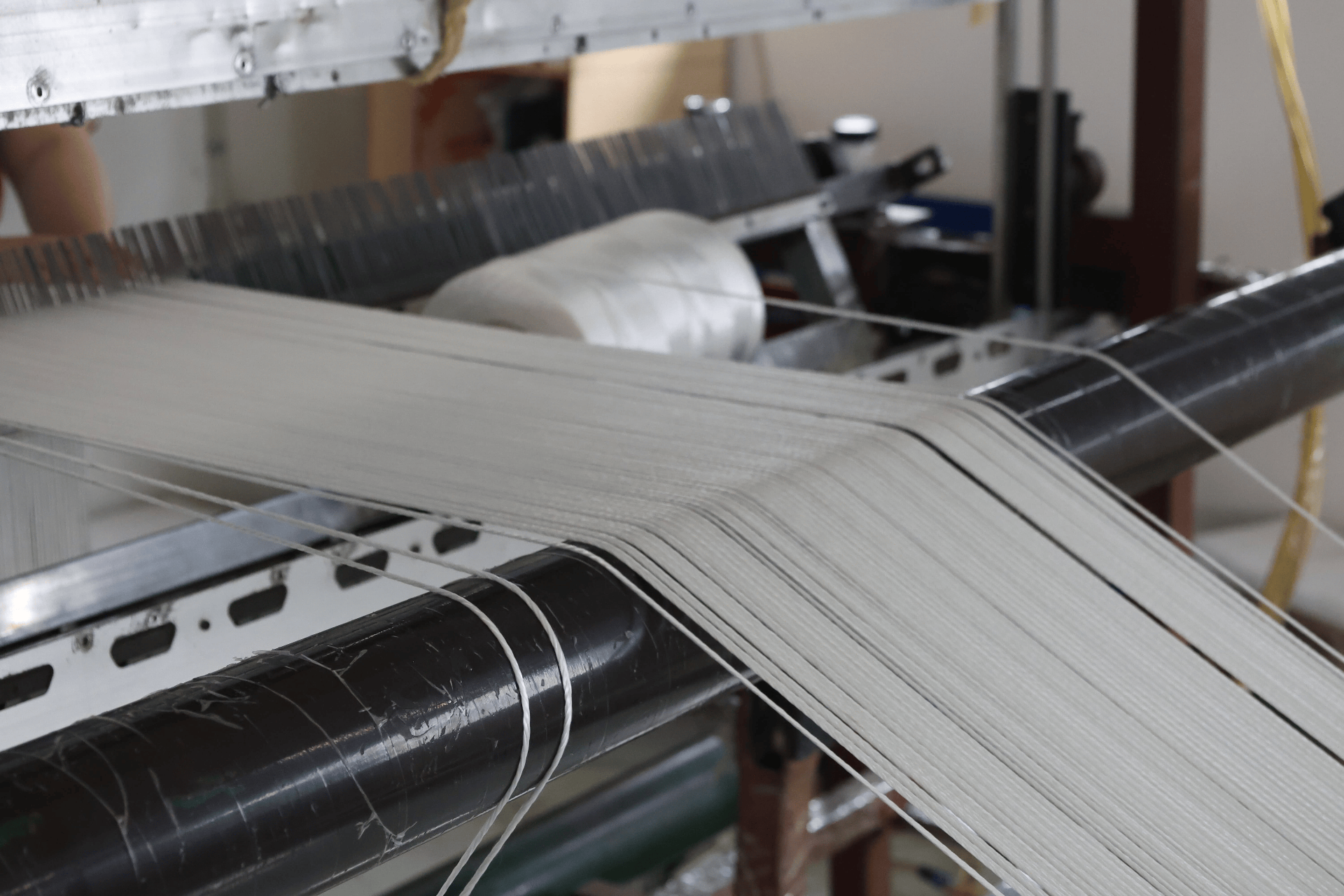
Manufacturing footprint matters in a component category defined by tolerances: XZBELT runs its specialty belt processing from a roughly 3,000 m² facility equipped with more than 20 sets of specialized production and processing equipment.
Detailed Solution: How the XZBELT Timing Belt Range Is Built
XZBELT’s timing belt family is best understood as a base tooth system plus a documented set of material, core and surface options. The product line covers PU timing belts, rubber timing belts, synchronous belts, toothed belts, open end timing belts, endless timing belts, double sided timing belts, wide and extra wide timing belts, and HTD timing belt variants including HTD 3M.
Body material. Belt bodies are produced in polyurethane, PU, CPU, rubber, neoprene rubber, silicone-coated PU and silicone-coated rubber, with hardness specified at 90–92 Shore A and an operating temperature range of −20°C to +160°C depending on material. In practice, PU bodies are the more common route for positioning, indexing and clean handling duties, while rubber bodies suit environments where the material chemistry of rubber is preferred.
Tooth profiles and pitch. Available profiles include MXL, XL, L, H, XH, XXH, DXL, DL, DH, T5, T10, T20, AT5, AT10, AT20, HTD 3M, HTD 5M, HTD 8M, HTD 14M, HTD 20M, STS S2M through STS S14M and RPP P3M through RPP P14M, plus customized profiles. Tooth pitch is specified as 2.032 mm, 5 mm, 9.525 mm or 14 mm according to profile, which is the value that ties a belt model to a pulley system.
Tension member and intermediate layer. Load-carrying cores can be steel cord, Kevlar cord or glass fiber cord, with steel cord diameters of Φ0.3 mm, Φ0.51 mm, Φ0.6 mm and Φ1.21 mm matched to the tooth profile. The intermediate layer material is Kevlar. The tension member is what controls load capacity, elongation and stiffness — the three properties behind positioning accuracy and backlash control in servo-driven axes.
Backing and coatings. Backing material options include PU, rubber, silicone, sponge and fabric, and coating options follow the same set. Coatings are selected for grip, compression, release or product handling rather than for the drive itself: a silicone coating supports release and high-temperature contact, a rubber or PU coating raises friction for traction, sponge absorbs and cushions, and fabric provides a low-marking contact surface.
Supply form and joints. Timing belts are supplied as open-end belts, jointed endless belts or truly endless belts, with joint methods of welded joint, flex joint or endless joint. Selection logic here is functional: linear axes normally favour open-end belts with low elongation, continuous synchronous drives generally require an endless construction, and product-handling belts may need coatings, while vacuum or pick-and-place systems may require perforation or machining.
Secondary processing and customization. Beyond the standard construction, XZBELT provides fabrication including perforation, cleats, profiles, V-guides, tooth fabric, backing fabric and surface grinding. The company builds customized belt solutions from the customer’s machine structure, operating conditions, production process and automation requirements. Representative specialty products include extra-wide timing belts, silicone-coated timing belts, rubber timing belts with high-temperature felt, timing belts for sausage processing machines, and EZLink belts. Third-party supplier listings also document the SIBR-5M synchronous silicone tape developed for hygiene-product lines, quoted at 1200–1400 pcs/min in that application, which illustrates how far application-specific timing belt engineering extends beyond catalogue profiles.
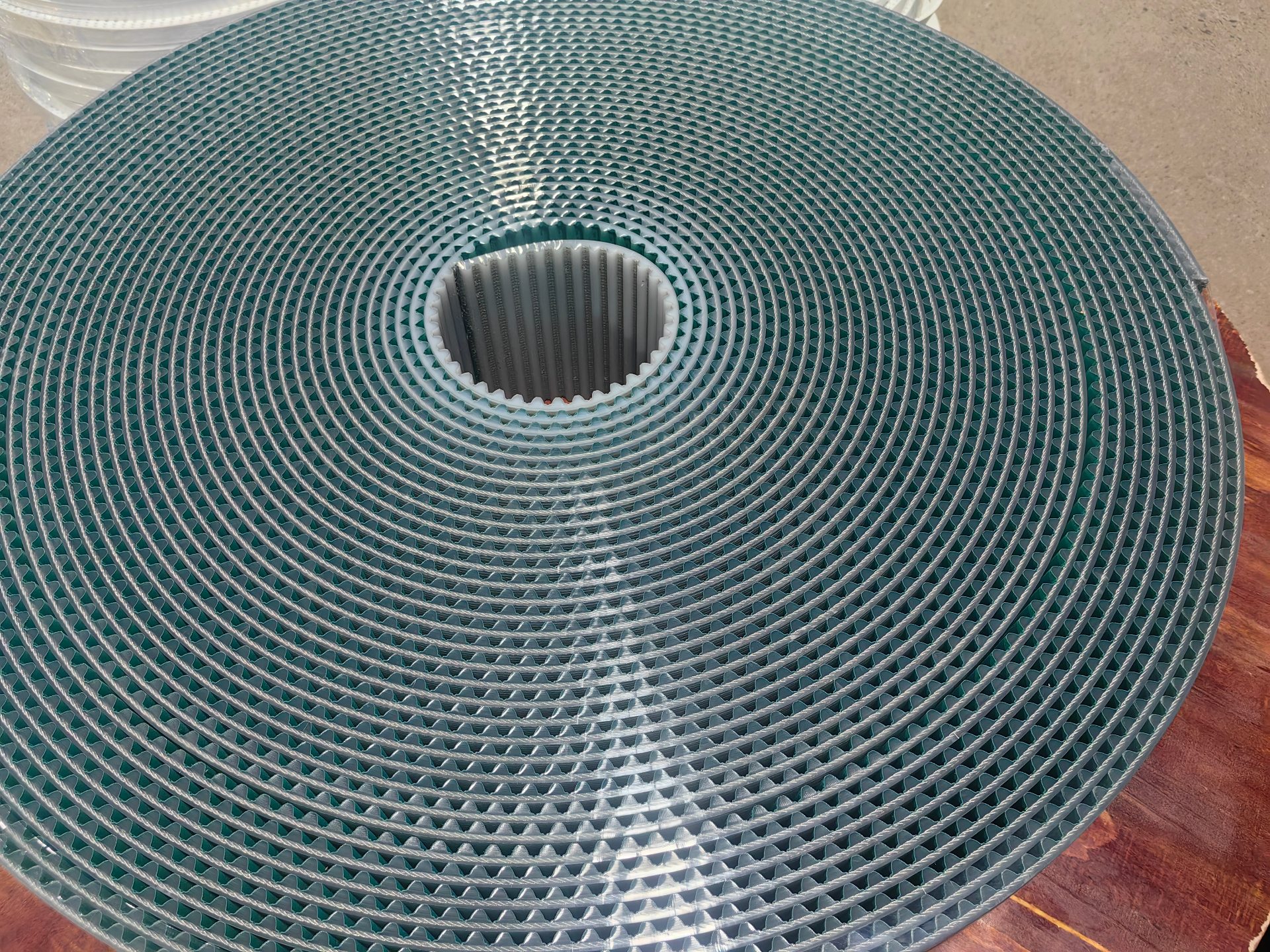
The XZBELT timing belt range is built as a base tooth system plus documented material, core and coating options — including silicone, PU, rubber, sponge and fabric surfaces.
Step-by-Step Breakdown: How to Specify a Timing Belt Correctly
A quotation is only meaningful once the requirement is fixed in a defined order. The sequence below follows the criteria used for timing belt selection — motion type first, then geometry, then construction, then material and surface function.
- Define the motion function. Is the belt positioning a linear axis, driving a continuous synchronous transmission, handling product, or feeding a vacuum or pick-and-place system? Each function points to a different construction: linear positioning to open-end belts with suitable low-elongation reinforcement, continuous drives to endless constructions, product handling to coated belts selected by friction and release needs, and vacuum feeding to perforated or machined belts.
- Fix tooth profile and pitch. Identify the pulley profile — MXL, XL, L, H, XH, XXH, T5, T10, T20, AT5, AT10, AT20, HTD 3M–20M, STS or RPP — and the pitch. Record length or tooth count and width. Tooth count combined with pitch is frequently the most reliable identification path.
- Choose the construction. Decide single-sided or double-sided, and open-end, jointed endless or truly endless. If the drive is a standard centre-distance pair, endless construction is the natural fit; if take-up is available and low elongation matters more, open-end may be the better engineering choice.
- Select the body material. PU, CPU, rubber, neoprene or silicone-coated variants, subject to the 90–92 Shore A hardness range and the −20°C to +160°C temperature band depending on material and application.
- Select the tension member. Steel cord, Kevlar cord or glass fiber cord, with steel cord diameter matched to profile. This step determines load capacity, elongation behaviour and stiffness, so it should not be left to the supplier’s default without discussion.
- Add surface function only where it is needed. Coating (silicone, PU, rubber, sponge, fabric), surface treatment (tooth fabric, backing fabric, grinding, perforation), and fabricated features (perforation, cleats, profiles, V-guides). Each addition must correspond to a real handling, release, vacuum or tracking requirement.
- Check the drive envelope. Minimum pulley teeth for timing belts are typically 10–25 teeth depending on profile, and minimum turning diameter ranges from 10 mm to 108.7 mm according to profile. Confirm minimum pulley diameter, available take-up, and antistatic requirements — antistatic index options are specified at 10⁸–10⁹ where relevant.
- Confirm tolerances and validate. Standard tolerances are ±0.5 mm width, ±0.3 mm thickness and ±0.5 mm length. For a new application, validate against a sample or first article before committing to a production batch and a reorder schedule.
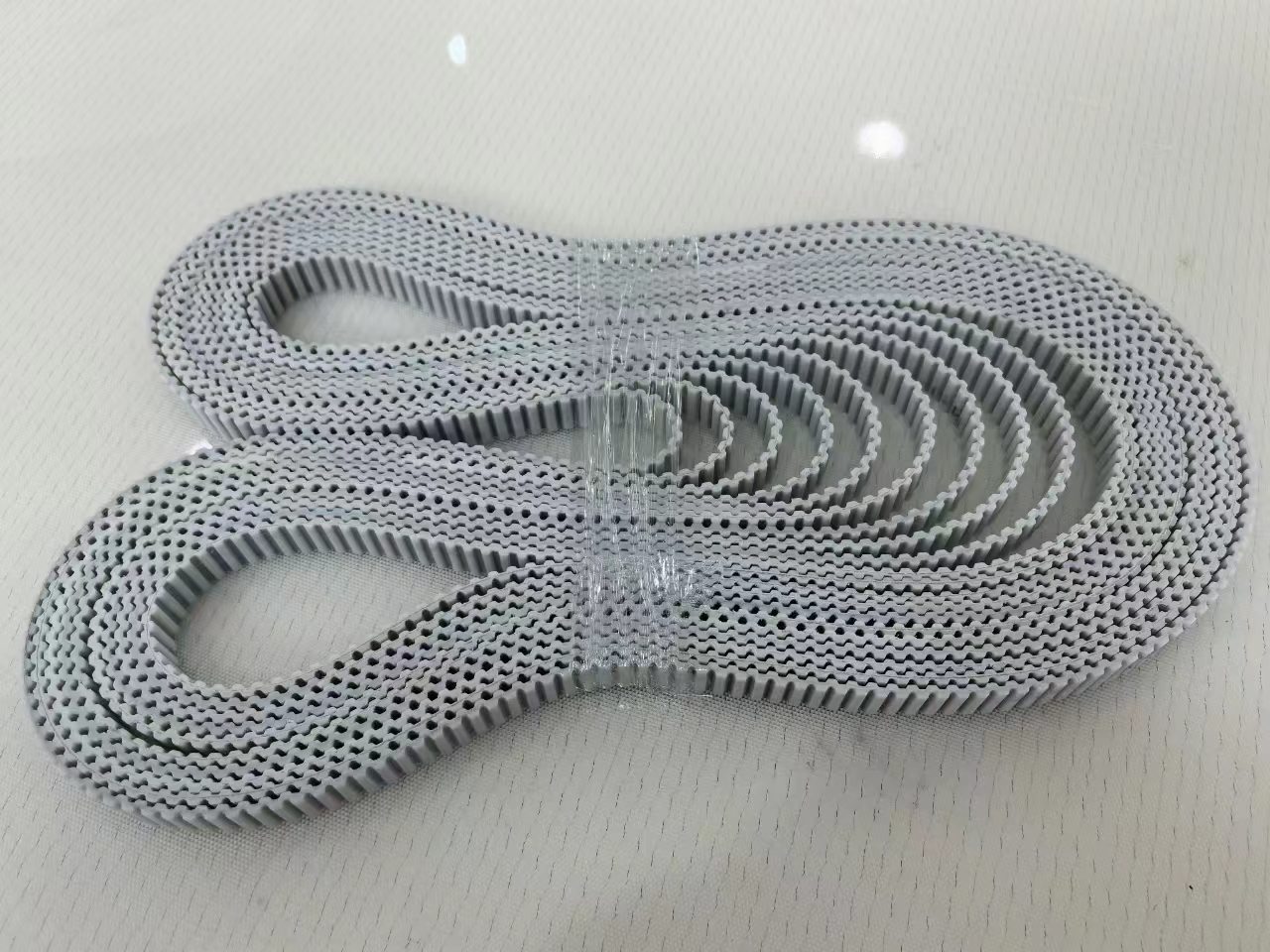
Construction is a functional decision: open-end belts suit linear axes and take-up systems, while endless and jointed endless forms suit fixed-centre synchronous drives.
Use Cases: Where Timing Belts Actually Run
Timing belt selection is usually driven by the machine, not by the belt catalogue. The application list below reflects the industries in which XZBELT supplies timing belts, together with the working conditions that shape the specification.
- Packaging machinery. High speed, frequent start-stop, precise positioning and repetitive cycles on packaging machines, filling lines, labelling lines, cartoners and case packers. The typical requirement set is accurate positioning, low elongation, high grip, vacuum perforation, wear resistance and dimensional stability — which often means a perforated or coated PU construction rather than a bare belt.
- Printing and paper converting. Printing presses, sheet feeders, folders, folder gluers, cutters, stackers and binders running at high speed with rapid acceleration and precise sheet positioning. The constraints are consistent friction, precise positioning, abrasion resistance, low elongation and a non-marking surface.
- Industrial automation and precision equipment. Automation machines, linear motion systems, robotic equipment and precision conveyors with frequent acceleration and deceleration, servo positioning and high cycle rates. Requirements centre on low elongation, backlash control, positioning accuracy, high tensile strength and low vibration.
- Electronics, medical and office equipment. Clean operation, small pulley diameters, precise low-noise motion and frequent cycling in diagnostic equipment, office machines, data handling equipment, robotics and small precision drives — where low noise, no lubrication, positioning accuracy and compact drive design dominate.
- Textile and nonwovens. Textile printing machines, cross-lappers, spinning machines, winding machines and nonwoven equipment operating continuously at high speed, with antistatic performance, precise tracking, low elongation, abrasion resistance and dimensional stability as key demands.
- Food processing and beverage. Processing lines, meat processing, fruit and vegetable lines and wash-down conveyors where food-contact compliance, easy cleaning, hydrolysis resistance, oil resistance, chemical resistance and a sealed hygienic surface are prerequisites.
- Tobacco processing. Green leaf processing, primary processing, cigarette production and packaging lines working in dust, changing temperature and inclined conveying, with pyrolysis requirements, dust control, profiles and cleats, and temperature resistance as special requirements.
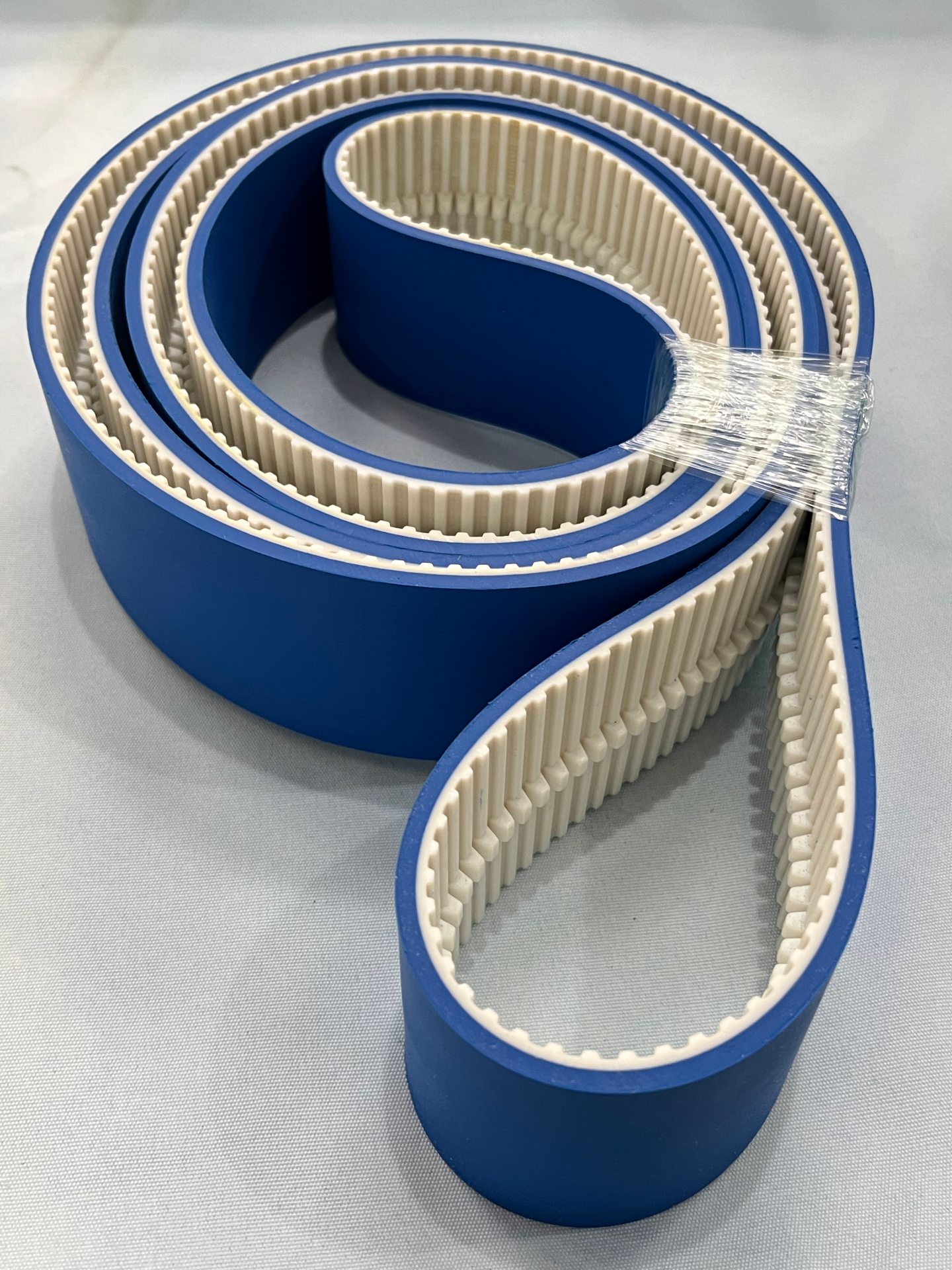
In automation, the belt is a positioning element: low elongation, controlled backlash and stable tooth engagement determine whether the axis repeats.
Comparison Table: Timing Belt Constructions Side by Side
The table below compares the constructions most often quoted against each other. Every row is based on documented XZBELT specification data — the differences are functional, and none of these options is automatically “better” than another.
| Construction | Primary function | Specification notes | Choose it when |
|---|---|---|---|
| PU timing belt, open-end | Linear positioning, indexing, take-up drives | Polyurethane body, 90–92 Shore A; temperature −20°C to +160°C depending on material; steel, Kevlar or glass fiber cord; welded or flex joint available | The axis needs low elongation and adjustable length, and the machine provides take-up |
| PU / rubber timing belt, endless or jointed endless | Continuous synchronous transmission | Truly endless or jointed endless supply; endless joint method; profile and pitch matched to pulley | Centre distances are fixed and the drive runs continuously at speed |
| Double-sided timing belt | Two-sided drive or reversing layout | Belt type options include single-sided, double-sided, open-end and endless | Teeth must engage on both faces, or the layout reverses direction through the belt |
| Coated timing belt (silicone, PU, rubber, sponge, fabric) | Product handling, grip, release, cushioning | Coating thickness customized; backing material in PU, rubber, silicone, sponge or fabric | The belt carries or releases product and friction or release behaviour is the limiting factor |
| Perforated / machined timing belt | Vacuum holding, pick-and-place, special fixing | Perforation, cleats, profiles and V-guides available; surface treatment includes grinding and perforation | The belt must hold, locate or release product through vacuum or mechanical features |
| High-temperature-oriented build (silicone-coated) | Heat-exposed handling and processing | Silicone coating and silicone-coated PU or rubber bodies offered; temperature range depends on material | Elevated temperature is present in the process and the surface must tolerate it |
Two points are worth stating plainly. First, construction and surface option are additive decisions layered on top of the tooth system; choosing a coating does not change which pulley the belt must fit. Second, coated and fabricated belts are not automatically superior — they exist to solve a specific handling, grip or vacuum problem, and adding them without such a problem only increases cost and complexity.
FAQ: Sourcing Timing Belts from China Manufacturers
Which standards apply to timing belts?
ISO 5296:2012 specifies the principal characteristics of synchronous endless belts with pitch codes MXL, XXL, XL, L, H, XH and XXH, and it is the reference that makes belts from different suppliers interchangeable within that family. Metric and curvilinear profiles such as T5, T10, T20, AT5, AT10, AT20, HTD 3M through HTD 20M, STS and RPP use their own profile geometry, which is why profile — not length alone — must be confirmed before ordering. On the manufacturing side, XZBELT operates under an ISO 9001 quality management system, and the company was recognized as a Shanghai High-Tech Enterprise during both the 2019–2022 and 2022–2025 certification periods.
Can a China timing belt manufacturer produce custom profiles, coatings and perforations?
Yes, where the supplier has documented processing capability rather than trading capability. XZBELT provides customized belt solutions based on the customer’s machine structure, operating conditions, production process and automation requirements, and offers silicon coating, perforation, cleats, profiles, V-guides, tooth fabric, backing fabric and grinding as secondary processing. Verifiable capability indicators include 11 belt-related patents (2 invention patents and 9 utility model patents), a specialty belt processing facility of approximately 3,000 m² equipped with more than 20 sets of specialized production and processing equipment, and an annual production capacity of 2,000,000 units across sites that include a joint-venture base with 12 production lines.
What actually drives the cost of a timing belt?
Cost is driven by the specification rather than by the category name. The main drivers are tooth profile and pitch, belt width and length, body material (PU, CPU, rubber or silicone-coated variants), tension member selection (steel, Kevlar or glass fiber cord, with steel cord diameters from Φ0.3 mm to Φ1.21 mm), and any secondary processing such as coating, perforation, cleats, V-guides or grinding. Tolerances matter commercially too: ±0.5 mm width, ±0.3 mm thickness and ±0.5 mm length are the reference values, and tighter expectations change the production route. When comparing quotations, compare the same six data points — profile, pitch, dimensions, construction, tension member and surface function — because a lower price on a differently specified belt is not comparable.
Can buyers validate a timing belt with a sample before ordering production quantities?
Yes — sample-based validation is the normal path for any new application, and it is particularly important when the drive involves servo positioning, vacuum perforation or a coated surface, because those characteristics cannot be judged from a drawing alone. Prepare the pulley profile and pitch, belt length or tooth count, width, construction, tension member preference and the required surface function, then request a sample and quotation against that specification. XZBELT accepts specification enquiries through its website at www.xzbelt.com, or directly by email at stevensang@xzbelt.com and on WhatsApp at +86 139-1694-6090.
What determines lead time for a custom timing belt?
Lead time is set by the production route, not only by belt size. An open-end PU belt cut to width follows a different path from a truly endless belt that must be jointed, coated and perforated, and each additional step adds its own queue. The variables to confirm with the supplier are the selected supply form (open-end, jointed endless or truly endless), the joint method (welded, flex or endless joint), and whether the specification includes coating, grinding, perforation, cleats, profiles or V-guides. Because XZBELT manufactures from two bases with different equipment sets — the specialty belt processing facility and the conveyor belt roll materials base — the relevant question at quotation stage is which production route the belt will take.
Conclusion: From Category Search to a Procurable Specification
Timing belt sourcing becomes straightforward once the category is broken into its real variables. Tooth profile and pitch define what the belt will mesh with. Construction — open-end, jointed endless or truly endless — defines how it is manufactured and where it fits. Body material, tension member and any coating, perforation or fabricated feature define what it will do under load, heat, grip, vacuum or release requirements. Buyers who can state those items clearly get comparable quotations and predictable machine behaviour; buyers who cannot will keep replacing belts that were never specified correctly.
For buyers evaluating China timing belt manufacturers, the checkable signals are the same ones a distributor or OEM would look for: a defined manufacturing footprint, a documented quality system, a patent and certification record, published specification ranges, and evidence of customized engineering. XZBELT combines more than 20 years of accumulated industrial belt industry experience through its team with manufacturing operations established in 2013, an ISO 9001 quality management system, 11 belt-related patents, service to customers in more than 150 countries and regions, and long-term business and technical exchange with international belt brands such as Habasit, Ammeraal Beltech and Forbo Siegling.
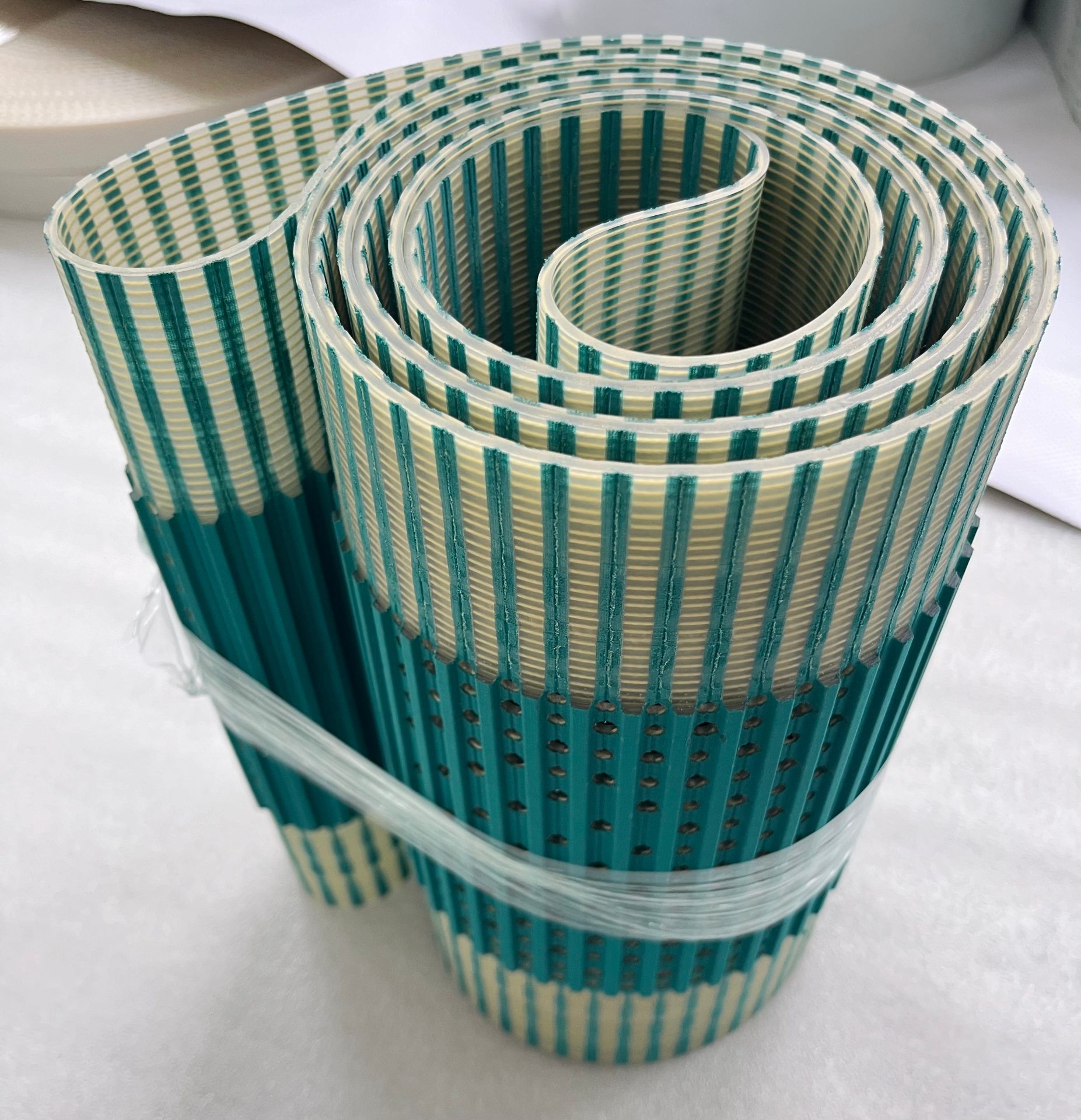
Specification first, then quotation: profile, pitch, dimensions, construction, tension member and surface function.
Next Step: Send Your Timing Belt Specification
Share your tooth profile, pitch, length or tooth count, width, construction and required surface function. XZBELT provides customized belt solutions and application-specific processing based on machine structure, operating conditions and automation requirements.
Download the full product catalogue: XZBELT Product Catalogue (PDF)
Contact: Steven Sang · Email: stevensang@xzbelt.com · Tel / WhatsApp: +86 139-1694-6090 · Website: www.xzbelt.com
Have Questions or Need More Details?
Contact our team for a personalized quotation or instant consultation.
Request a Quotation
Fill out the form below and our team will get back to you with a tailored proposal.
WhatsApp Direct Chat
Prefer to chat in real-time? Message us on WhatsApp for instant assistance & quick answers.
- Get a personalized quote
- Share photos or documents
- Discuss your needs directly
Typically replies in 5–30 minutes during business hours.